
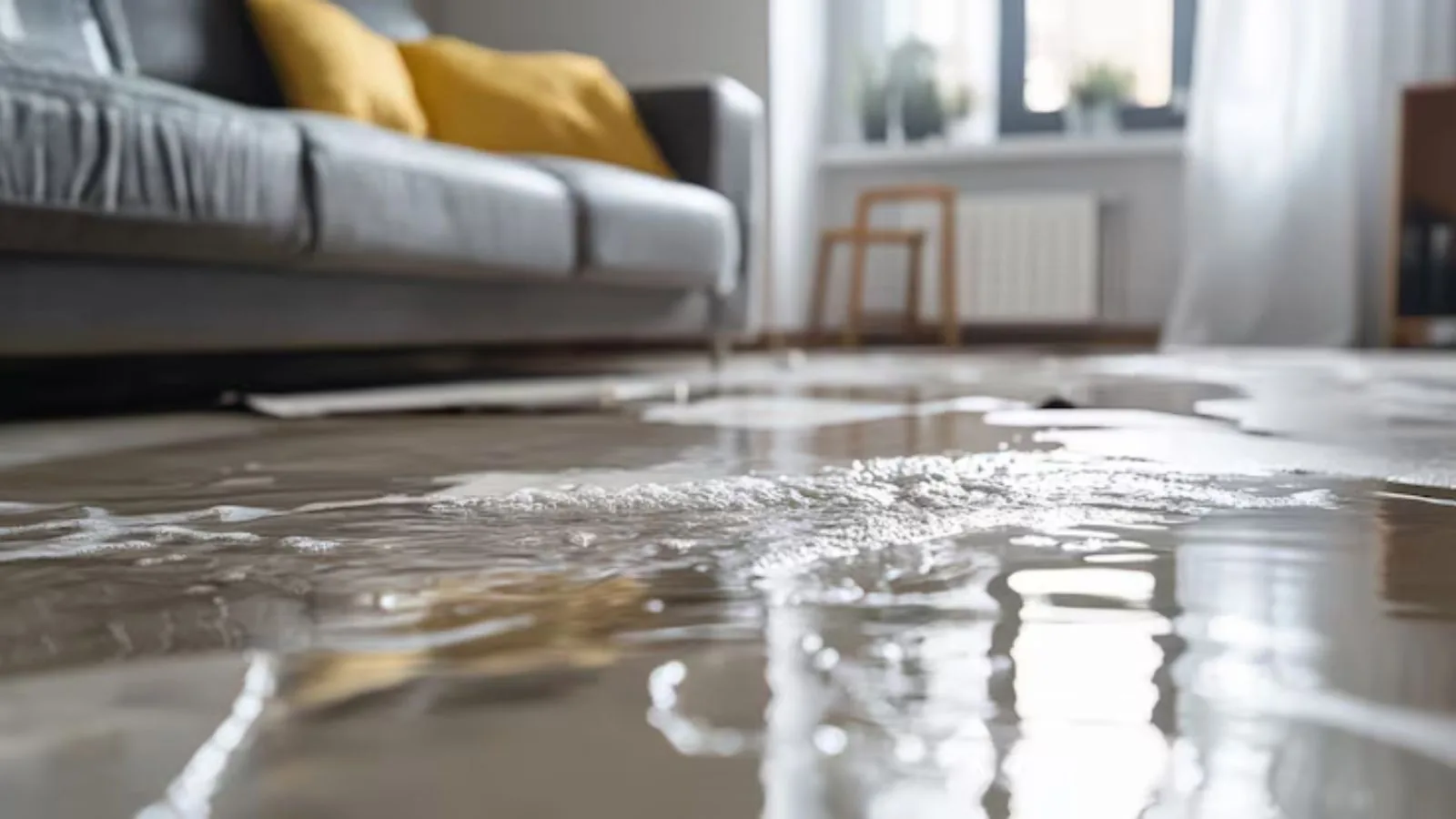
After a leak, the surface can look dry while the wall behind it is still wet. Moisture meters, thermal cameras and humidity gauges are how restoration crews see what the eye cannot. If you have ever watched someone press a small device against a wall and call out numbers, this guide explains what they were doing.
The point is not to memorize numbers. It is to understand that a reading only has meaning when compared to a dry reference, and that drying is finished when the readings say so, not when the room feels dry.
The tools and what each one tells you
| Tool | What it measures | Limit to know |
|---|---|---|
| Pin meter | Electrical resistance between two pins in wood or drywall | Leaves small holes and reads only the spot it touches |
| Pinless meter | Moisture below the surface through a scanning sensor | Readings are relative and affected by density and depth |
| Thermal camera | Surface temperature differences | Shows where moisture may be, not how much |
| Thermo-hygrometer | Air temperature and relative humidity | Describes the air, not the material |
No single tool is enough. Crews combine them to build a picture of the whole wet area.
Why a dry reference matters
A number such as 18 or 30 means nothing alone. Different materials settle at different normal levels, and a home’s own dry level depends on season and humidity. The standard practice is to take readings from unaffected materials of the same type in the same building. That gives the dry goal.
This is the logic behind the ANSI/IICRC S500 approach to drying. Wet materials are dried toward the dry standard, not toward a universal figure.
Need moisture mapped?
Want your own walls read? Call and describe the area that stayed damp.
Mapping the wet area on day one
On the first visit a crew scans walls, floors and ceilings, marks the edges of the wet area and records readings at set points. A thermal camera helps find cooler damp areas. Probe holes or small openings may confirm what is inside a wall.
Water spreads sideways and upward. A wet baseboard can mean a wet wall, and a ceiling stain can mean a wet cavity above. That is why mapping comes before decisions about what to remove.
Daily monitoring until the goal is reached
Drying equipment runs while readings are checked on a schedule. Air movers push air across wet surfaces and dehumidifiers pull moisture from the air. As readings fall, equipment is repositioned or removed. See structural drying and dehumidification for how the setup works.
If readings stall, something is wrong. A hidden source may be still leaking, insulation may be holding water or a material may need to be removed.
Humidity in the air and why it matters
The air has a say. Relative humidity above about 60 percent encourages mold growth, according to EPA guidance, and the EPA suggests keeping indoor humidity between 30 and 50 percent. Dehumidifiers are used to hold the air dry enough to pull moisture out of materials.
This is why windows are often kept closed during drying. Opening them on a humid day can slow the process.
Common misreadings to avoid
- Treating a single dry reading as proof the whole wall is dry.
- Reading metal studs, pipes or fasteners and mistaking them for moisture.
- Comparing a reading against a number from the internet instead of a dry reference.
- Assuming a thermal camera image shows wetness without confirming it with a meter.
- Stopping drying because the surface feels dry to the touch.
What you can ask for
Ask to see the readings, the dry reference and the drying log. A reputable crew will explain what each number means and when equipment will come out. These records also support an insurance claim.
If you want a reading checked by someone independent, you can ask a separate inspector. Sometimes a second set of eyes is reasonable, especially after a large loss.
What a drying log looks like over a few days
A drying log is a simple record. On day one, it shows the wet area, the readings at each marked point and the equipment placed. On the following days, the same points are read again. The numbers should trend toward the dry standard. If one point falls slower than the others, the crew checks for trapped moisture.
On the last day, readings at every point match the dry reference and equipment is removed. A clear log tells you when drying finished and what was done. It is as useful to you as it is to an insurer.
Liberty and Clay County local note
Liberty basements and crawl spaces often sit below grade, and humidity swings between summer and winter. Because the City of Liberty operates its own water utility, a sudden spike in your water bill can be an early clue that a hidden leak is feeding a wet wall.
Older houses in the Jewell-Lightburne and Dougherty-Prospect Heights districts, built between about 1850 and 1946, sometimes have plaster and wood framing that read differently on a meter than modern drywall. Crews take that into account by comparing against dry areas in the same house.
Crews bring the same meters and logs to jobs in Excelsior Springs and Kearney.
Frequently asked questions
What is a normal moisture reading for drywall?
There is no single number that fits every house. Readings are compared to unaffected drywall in the same building to set the dry goal.
Can I use a basic meter at home?
A basic meter can give a rough clue, but results vary by material and tool. Professional readings are compared to a dry reference and logged.
Does a thermal camera show water?
It shows temperature differences that may indicate moisture. A meter confirms it.
Can older Liberty houses be read the same way?
Yes, but plaster and old wood read differently, so crews compare against dry areas of the same house.
Walls still feel damp?
Call and ask for a moisture map of the affected rooms.