
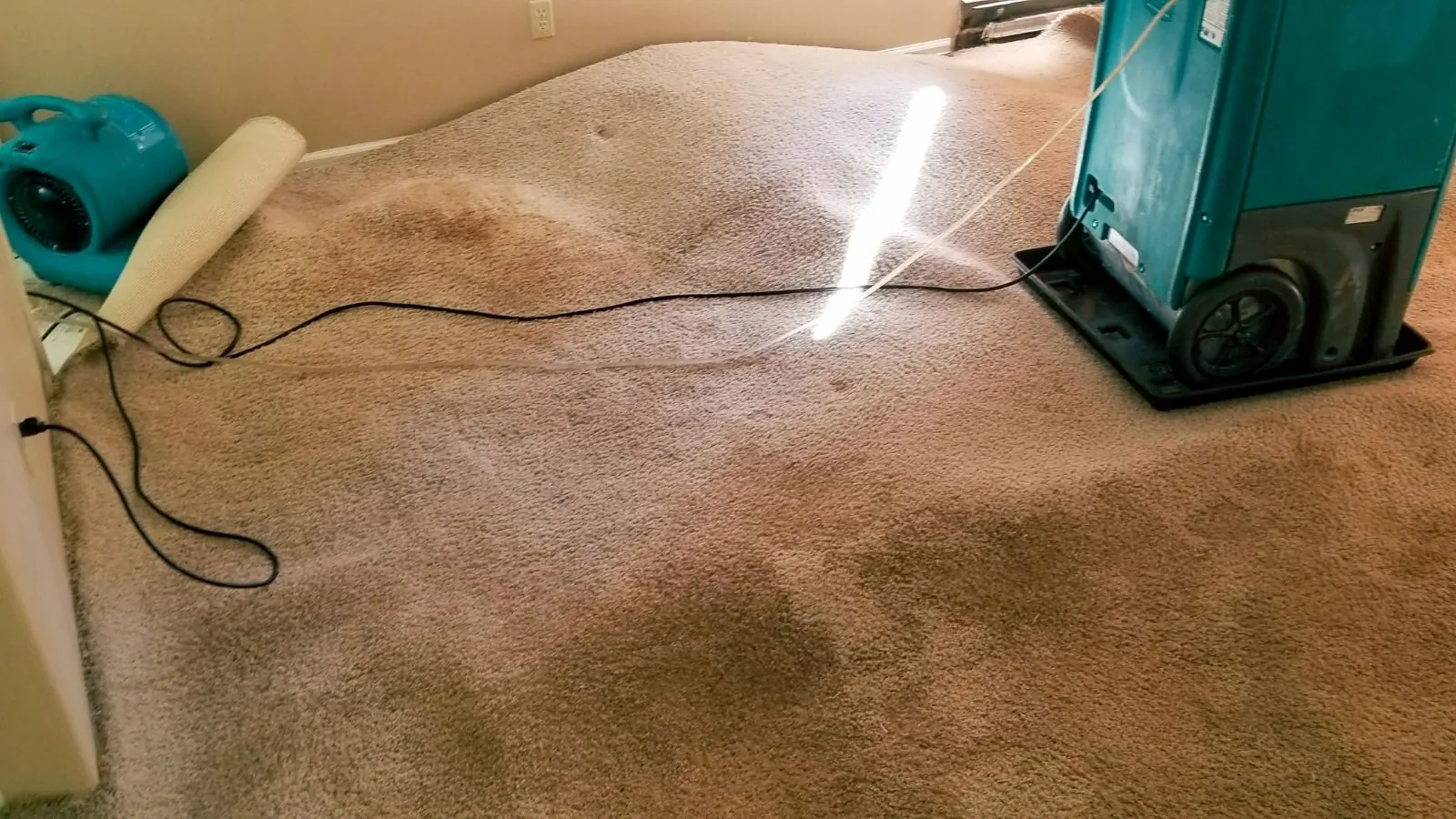
Carpet water damage restoration is the extraction of water from carpet and padding and the drying of the floor beneath. Callers in Liberty, MO describe a closet carpet and pad that are completely in water after a neighbor’s sprinkler system, a laundry room flooded ankle high, or carpet lifted from a washer leak. The line is open 24/7.
Whether carpet is saved depends on the water category, how long it was wet and the carpet and pad type. Clean water caught early often leaves carpet that can be dried in place.
Can wet carpet be saved?
| Water type | Time wet | Usual decision |
|---|---|---|
| Clean supply water | A day or less | Extract, lift if needed, dry in place |
| Clean water left for days | Several days | Pad usually discarded, carpet may be cleaned and dried |
| Gray or Category 2 water | Any | Pad discarded, carpet cleaned or removed |
| Category 3 or sewage | Any | Carpet and pad removed |
Nothing here promises a result. Moisture readings and a look at the carpet and pad decide each case.
Why the pad matters most
Padding acts like a sponge. It holds water long after the carpet surface feels dry and is often the first thing to smell. Pads cost far less than carpet and are often replaced even when the carpet is kept. Drying the subfloor beneath is as important as drying the carpet.
In multi-story homes, water in carpet on an upper floor may also have reached the ceiling below. See ceiling water damage repair.
Carpet is squishing underfoot?
Call the 24/7 line. The sooner the water comes out, the more can be saved.
Extraction and drying steps
- Surface water is extracted with weighted extraction tools.
- Carpet is lifted and pulled back so air can reach the pad and floor.
- Wet pad is removed and disposed of when it cannot be dried.
- Air movers and dehumidifiers dry the carpet, tack strip area and subfloor.
- Moisture readings confirm dryness before carpet is re-stretched or replaced.
Standing water is first covered on water extraction.
Odor, mold and when carpet goes
Wet carpet can smell within days and can grow mold when moisture stays. If you see dark spots or smell earthy odor, stop using the room and call. Mold under carpet is addressed on the mold remediation page, and callers often find it only after pulling carpet up.
Insurance and carpet claims
Sudden leaks are often covered and slow seepage often is not. Keep a sample of the carpet and pad if your adjuster asks, photograph the area before removal and keep a list of removed items.
Carpet types and what they mean for drying
Not every carpet reacts the same way to water. Synthetic fibers such as nylon and polyester shed water readily and often dry well when the pad underneath is handled correctly. Wool and other natural fibers hold moisture longer and can discolor or shrink. The backing matters too, since latex and jute backings respond differently to repeated wetting.
Berber and looped styles can pull or unravel when water sits on them, while cut pile tends to recover better. Crews check the carpet label if it is available, but readings from a moisture meter are what decide whether a room can be dried in place or has to be lifted.
Carpet over concrete versus carpet over wood
In a basement, carpet usually sits on a concrete slab. Concrete can hold moisture for a long time and release it slowly into the pad and carpet above. Carpet over a wood subfloor is a different problem, because the subfloor itself can absorb water and swell. Each needs its own drying plan and its own set of readings.
That is why the first visit includes readings of the floor under the carpet, not only of the carpet surface. A dry surface over a wet slab is a common reason for odors that return a few weeks later.
The published standard behind this work
The drying plan for carpet water damage restoration follows ANSI/IICRC S500, the published industry standard for water damage restoration. It is a document anyone can look up, and it does not depend on trusting a company name. Among other things it covers how the water source is classified, how drying goals are set and how moisture readings are logged.
That gives you something concrete to ask for. Request the starting readings and the readings at each visit in writing, so the file shows what was wet, what dried and when the work was finished.
What affects carpet water damage costs
Water category
Clean water leaves more options than contaminated water.
Time wet
Days of saturation reduce what can be saved.
Pad type
Pad is often replaced and costs differ by type.
Area
Square footage sets equipment and labor.
Subfloor moisture
Wet subfloor adds drying time.
Call (833) 521-1033 and describe the carpet and pad, and the plan for drying in place or lifting is explained before work.
Before the crew arrives
Four steps help.
Stop the source
Shut off the water that caused it.
Lift furniture
Put foil or blocks under legs to avoid stains.
Remove small items
Take belongings off the wet carpet.
Photograph
Record the carpet and the wet area.
Questions about carpet water damage
Do you handle carpet water emergencies at night or on weekends in Liberty?
Yes. The line is open 24 hours a day, and early extraction helps carpet.
Should I pull the carpet up myself?
Leave it to the crew if the water may be contaminated. Clean water in a small area can be lifted carefully.
How long before wet carpet gets moldy?
There is no fixed day count. Moisture left in carpet and pad raises the risk, so drying quickly matters.
Will you replace the pad?
Pad is often replaced because it holds water. Readings and category decide.
Carpet soaked?
Lift what you can off the carpet and call. The line explains drying or removal of the pad.