
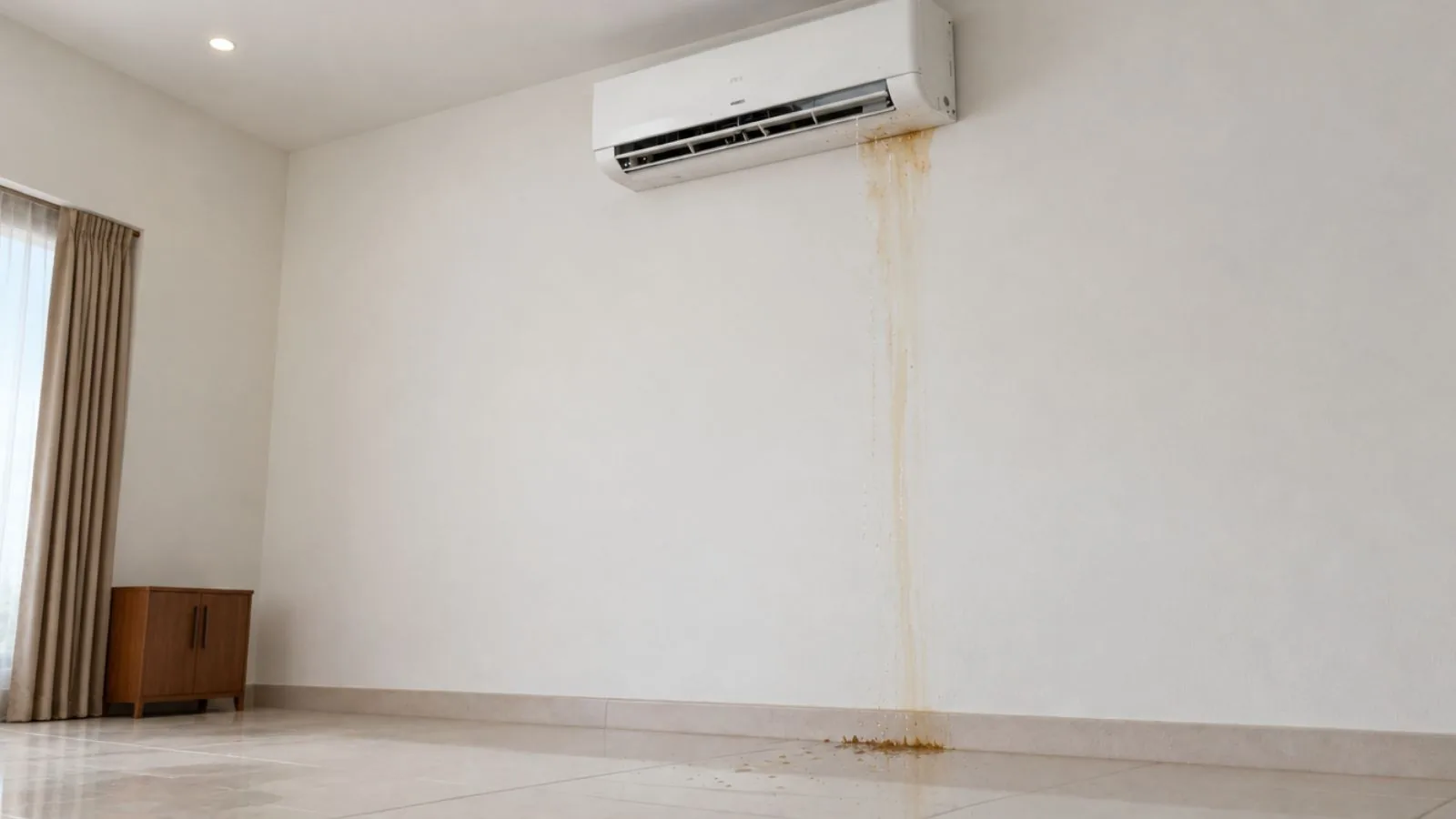
AC leak water damage is the wetting of ceilings, walls, closets and floors by condensate water from an air conditioner or air handler. Cooling a home pulls moisture out of the air, and when the drain line clogs or the pan overflows, that water goes into drywall and flooring. In Liberty, MO summers, systems run for months, so a slow leak can build up damage before anyone sees it. The line is open 24/7.
Turn the system off at the thermostat to stop making more condensate, then look at the drain pan and line. If water is dripping through a ceiling, keep clear and call.
Where AC leaks start
Air handlers sit in attics, closets, basements and garages. The cooling coil produces condensate that drains through a line, and that line can fill with algae and sludge. When it clogs, water backs up into the drain pan, overflows the pan and drips into whatever is below. A secondary pan or float switch may catch it, but not every system has one.
Callers describe a closet next to the air handler with a wet floor, a ceiling stain below an attic unit, or hardwood boards cupping along a wall where a line ran. Each of those is a condensate leak, not a roof or plumbing leak.
Signs the damage is from the HVAC system
- A stain that appears only when the system has been running.
- Water dripping from a ceiling vent or register.
- A musty smell near a closet or hallway that holds the air handler.
- Cupped or buckled wood flooring along a line of wall.
- Drain pan or line with standing water or sludge.
Ceiling damage from this source is described on ceiling water damage repair, and floor damage on hardwood floor water damage repair.
AC unit leaking onto your ceiling?
Turn off the system, then call the 24/7 line.
Drying and repair after a condensate leak
Moisture meters and a thermal camera trace where condensate traveled. Wet insulation and sagging drywall are removed, and wall cavities and flooring are dried with air movers and dehumidifiers. Because condensate sits in a warm, humid space, mold can form on damp materials, so removal and drying are done carefully and the cavity is inspected before closing.
If mold is found, the mold remediation page explains what containment and removal involve.
HVAC service and restoration are separate jobs
An HVAC technician clears the line, replaces a cracked pan and installs a float switch or a secondary line. Restoration does not repair the system. If the water source is not stopped, the damage returns, so keep both jobs on your list.
For a related source in the attic or wall, see appliance leak water damage.
Insurance and slow leaks
A condensate leak that built up over weeks may be treated as a maintenance issue by some insurers and as covered damage by others. Ask your insurer, and photograph the unit, the pan and the stains. Keep records of past HVAC service, since a clean maintenance history can help show the problem was not neglected.
The published standard behind this work
The drying plan for ac leak water damage follows ANSI/IICRC S500, the published industry standard for water damage restoration. It is a document anyone can look up, and it does not depend on trusting a company name. Among other things it covers how the water source is classified, how drying goals are set and how moisture readings are logged.
That gives you something concrete to ask for. Request the starting readings and the readings at each visit in writing, so the file shows what was wet, what dried and when the work was finished.
What affects AC leak repair costs
Time the leak ran
A single overflow is smaller than weeks of dripping.
Location of the unit
Attic units wet ceilings and insulation, closet units wet floors.
Mold presence
Visible growth adds containment and removal.
Flooring affected
Wood and laminate can cup and may need replacing.
Rebuild scope
Ceiling and wall finishes are quoted after drying.
Call (833) 521-1033 and describe where the unit drains, and the drying scope for the ceiling or closet is explained before work.
While you wait for help
A few quick steps limit the spread.
Turn the system off
Switch off the AC at the thermostat to stop new condensate.
Empty what you can
Remove water from the drain pan if it is safe and reachable.
Move belongings
Take items out of the wet closet or under the wet ceiling.
Photograph
Record the unit, the pan and each stain.
Questions about ac leak water damage
Does an AC leak need an emergency call?
Active dripping through a ceiling does. A small damp spot can wait for business hours, but the line is open 24/7 and you can ask.
Do you fix the air conditioner?
No. An HVAC technician repairs the system. This service handles drying, cleanup and rebuild.
Can condensate water cause mold?
It can, because the water sits in a warm space. Prompt drying lowers the risk, and testing or removal is covered on the mold page.
Why are my floors cupping near the air handler?
A leaking condensate line can wet the floor system from below or beside it, and wood boards swell and cup as they absorb moisture.
AC leaking inside?
Switch off the unit if the pan has overflowed, then call about the wet ceiling or closet.