
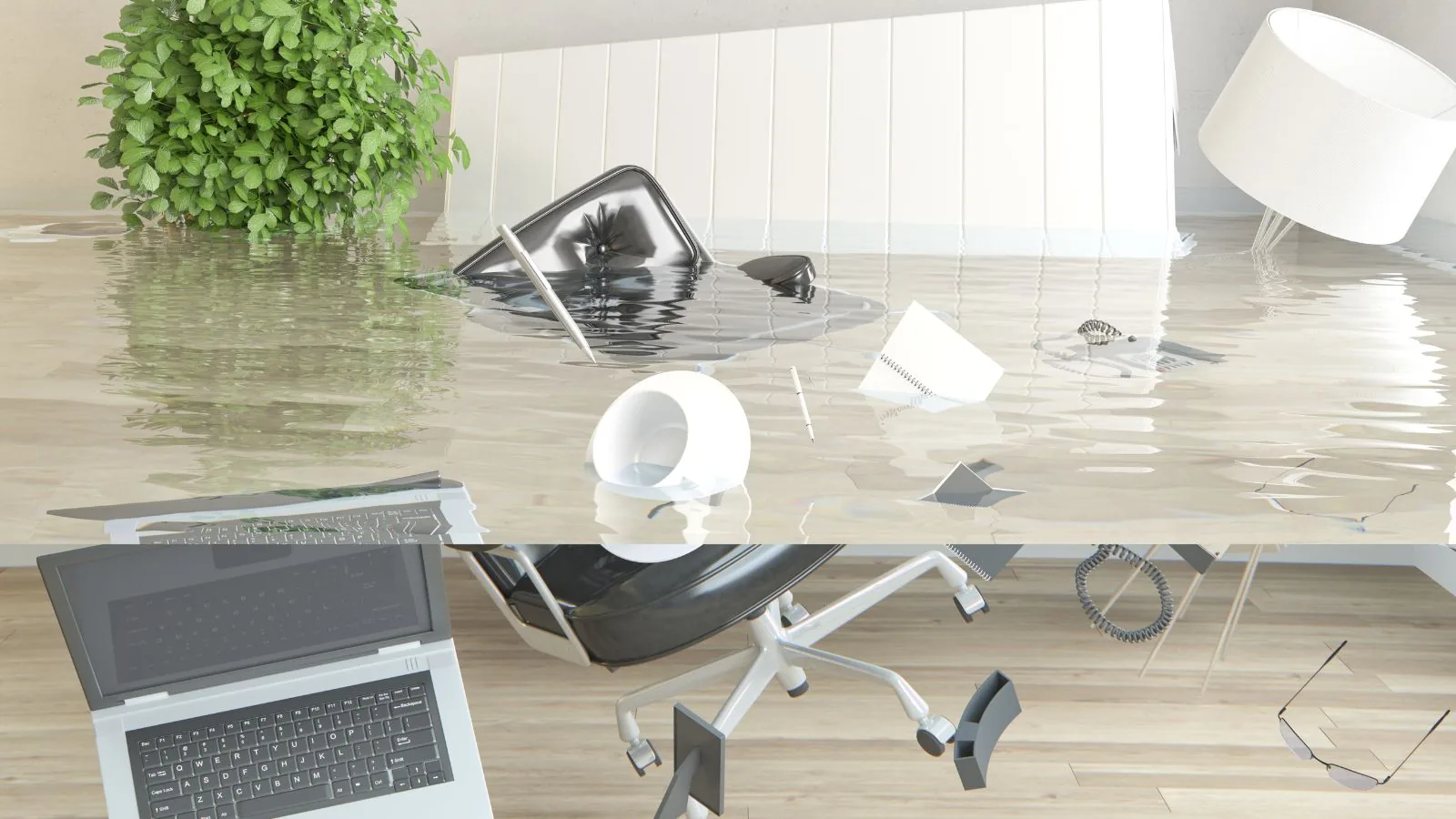
Commercial water damage restoration is the extraction, drying and cleanup of water losses in non-residential buildings such as shops, offices, restaurants, apartment buildings and vacant properties. In Liberty, MO commercial losses arrive at odd hours, often when the building is empty, so the line is open 24/7. The scope depends on the size of the building, the systems in it and how long the water ran.
If water is running in your building, shut off the water at the main or the zone valve, secure electrical equipment, and tell anyone in the building to avoid wet areas. Then call and describe the property.
Business water loss emergency: the first hour
In a commercial building the first moves are stopping the source, protecting people, and protecting equipment and stock. Shut off the main or the affected zone, keep staff and customers out of wet areas, and move inventory and records off the floor if it is safe to do so.
Call the line early. Large or unusual losses, including a vacant property with a major loss, benefit from a fast moisture map because water in commercial buildings can travel through ceilings, floors and between tenant spaces.
How commercial jobs differ
| Factor | Residential loss | Commercial loss |
|---|---|---|
| Size | Rooms to a few floors | Large floor plates, multiple units |
| Contents | Furniture and belongings | Inventory, records, machines |
| Downtime | Household inconvenience | Lost revenue and closed doors |
| Systems | One HVAC and panel | Several HVAC zones, sprinkler lines, shared walls |
| Parties | Homeowner and insurer | Owner, tenant, property manager and insurers |
The scope is written with these differences in mind, and sections of the building can sometimes be kept open while others are dried.
Water loss at your business?
Call the 24/7 line. The first call covers the building, the source and the downtime concern.
Large losses and drying strategy
Large buildings need drying zones. Crews isolate wet areas from dry ones with containment, run dehumidifiers matched to the volume of air and place air movers on floors and walls. Moisture mapping covers every affected area and is repeated daily. See structural drying and dehumidification for the equipment.
Standing water is removed first, as covered on water extraction. If the water came from outside or from a sewer, flood damage cleanup and sewage backup cleanup explain the added safety steps.
Vacant properties, tenants and shared walls
A leak in an unoccupied unit may run for days before someone finds it. Shared walls and ceilings mean the water can cross into neighboring tenants, so documentation of whose space was affected matters. Photograph and note every unit involved and keep a written timeline.
Property managers often need a written scope and daily moisture logs for owners and insurers. Ask for them at the start of the job.
Commercial insurance and documentation
Commercial policies differ a great deal, including whether business interruption coverage applies. Ask your insurer or broker what is covered and what documentation they require. Keep invoices for emergency steps, photographs, a list of damaged stock and moisture records. Nothing here promises a claim will be approved.
The published standard behind this work
The drying plan for commercial water damage restoration follows ANSI/IICRC S500, the published industry standard for water damage restoration. It is a document anyone can look up, and it does not depend on trusting a company name. Among other things it covers how the water source is classified, how drying goals are set and how moisture readings are logged.
That gives you something concrete to ask for. Request the starting readings and the readings at each visit in writing, so the file shows what was wet, what dried and when the work was finished.
What affects commercial water damage costs
Building size
Large floor plates need more equipment and monitoring.
Water category
Clean, gray and black water change the scope.
Contents and stock
Removing and protecting inventory adds labor.
Occupancy
Working around open tenants affects scheduling and containment.
Rebuild scope
Ceilings, flooring and finishes are quoted after drying.
Call (833) 521-1033 and describe the space, its use and whether power is on, and the scope is explained with the building contact.
In the first hour
Four moves protect people, property and the claim.
Stop the source
Close the main or zone valve and report a sprinkler line issue to the fire contractor.
Protect power
Keep staff away from wet panels, floor boxes and equipment.
Move stock
Lift inventory, records and electronics off the floor if safe.
Record the loss
Photograph the damage and make a list of affected units and items.
Questions about commercial water damage
Do you handle commercial water damage emergencies at night or on weekends in Liberty?
Yes. The line is answered 24 hours a day, including holidays, and commercial losses often happen after hours.
Can part of the building stay open during drying?
Sometimes. Containment can separate wet areas from dry ones, and the plan depends on the layout and the water category.
Do you work with property managers and insurers?
Yes. Written scopes and daily moisture logs are provided so owners, managers and insurers have records.
Do you handle fire sprinkler water?
Water released from a sprinkler line is dried and cleaned like any other water loss. Repairs to the system are done by a fire protection contractor.
Water loss at your business?
Call with the building contact on hand, and scope and price are explained before work starts.