
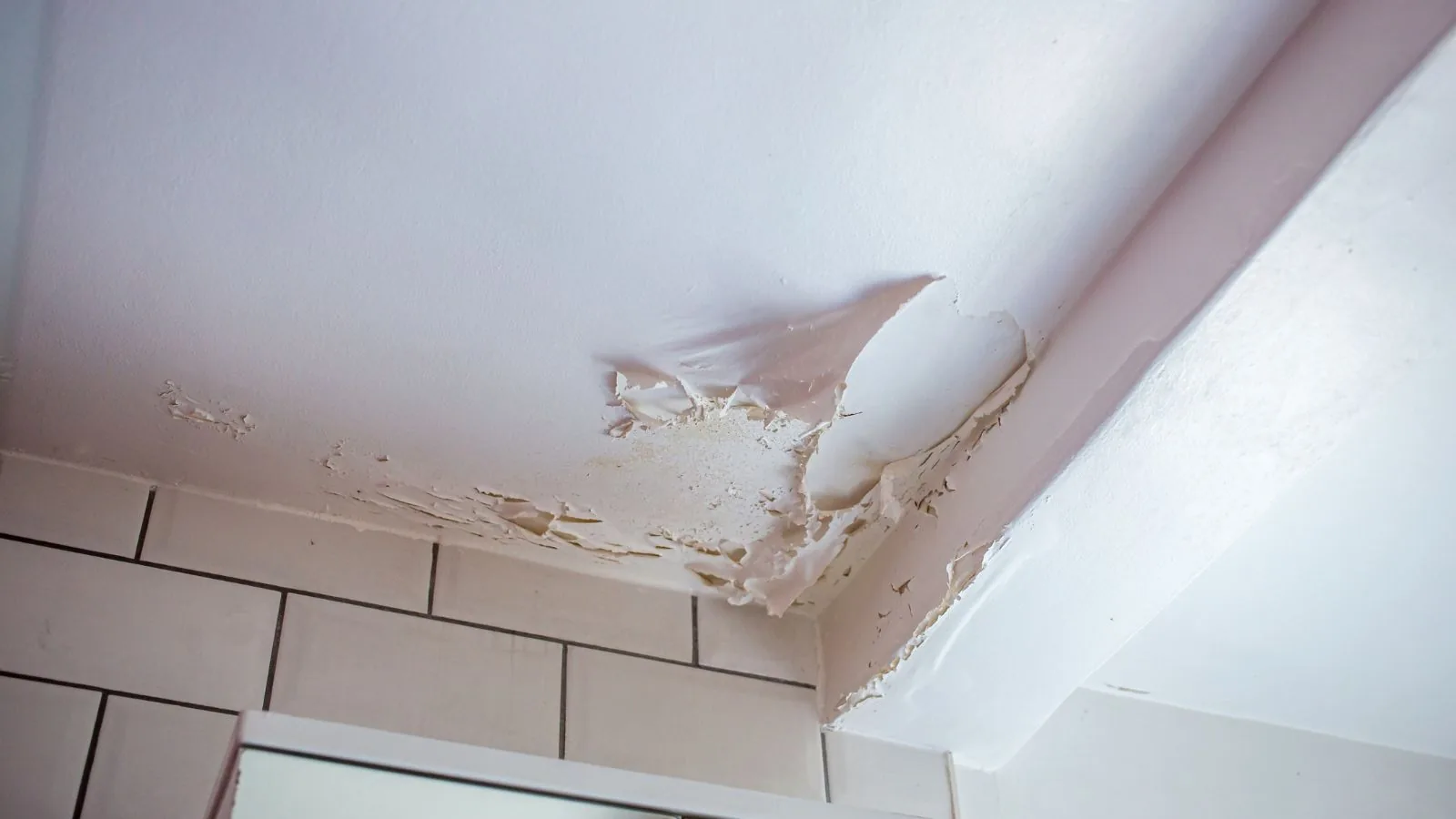
Ceiling water damage repair covers the drying and rebuilding of a finished ceiling after water has soaked it from above, whether the water came from a roof leak, an upstairs bathroom, a supply line or an attic air handler. In Liberty, MO a ceiling stain is rarely the whole story, because insulation, framing and drywall above it hold water that you cannot see. The call line is open 24/7 for sagging or dripping ceilings.
If a ceiling is bulging or dripping, keep people out of the room, move furniture aside and set a bucket under the drip. Do not poke a hole unless you can control where the water goes, and stay away from light fixtures and fans in a wet ceiling.
Sagging or dripping ceiling: treat it as an emergency
A ceiling holding water can fail without warning. Wet drywall is heavy, and a sagging bubble can release gallons at once. If the ceiling is bowed, pierce it only where a bucket can catch the water and keep your face and body out from underneath. Turn off power to wet light fixtures if you can do so safely from a dry spot.
Water from a roof leak, an upstairs fixture and a sweating attic duct all show up as the same kind of stain, so the first job is identifying which source is active.
Roof leaks and ceiling damage
Roof leaks have no separate page on this site because the damage is the same ceiling damage. Water enters through failed shingles, flashing, vents or valleys, spreads across decking and insulation and shows up as a ceiling stain, usually away from the entry point. The roof itself is repaired by a roofer, and restoration deals with the wet interior.
After a storm, look for stains along walls and corners, peeling paint on a ceiling and a musty smell in the attic. Also see storm water damage cleanup for damage that arrives with wind and driving rain.
Water coming through the ceiling?
Call the 24/7 line. A sagging ceiling should be treated as urgent.
Other sources above the ceiling
Upstairs toilets, bathtubs, supply lines and drain lines can leak into the ceiling below. Condensate lines from air handlers in an attic or closet can back up and drip into drywall, a pattern described on the AC leak water damage page. Burst lines are covered on burst pipe water damage.
Whatever the source, the first step after stopping the water is mapping how far it traveled with moisture meters and a thermal camera.
How a ceiling gets dried and repaired
Wet insulation and sagging drywall are removed because they dry slowly and can hold moisture against framing. The cavity is opened to dry framing with air movers and dehumidifiers. When readings return to normal, new insulation and drywall are installed and finished to match.
| Condition | Usual approach |
|---|---|
| Light stain, dry and firm | Find and stop source, dry, seal and repaint |
| Bubbled or soft drywall | Open and remove wet drywall, dry framing, rebuild |
| Collapsed section | Containment, removal, drying and rebuild |
Ceiling damage and insurance
Policies often cover sudden roof and plumbing damage and exclude long-term seepage, so ask your insurer how your loss is classified. Photograph the ceiling from several angles before and after any opening, and keep removed materials until your adjuster says otherwise. Rebuild work may need a permit, and the City of Liberty Building Inspections office is at 816-439-4534.
The published standard behind this work
The drying plan for ceiling water damage repair follows ANSI/IICRC S500, the published industry standard for water damage restoration. It is a document anyone can look up, and it does not depend on trusting a company name. Among other things it covers how the water source is classified, how drying goals are set and how moisture readings are logged.
That gives you something concrete to ask for. Request the starting readings and the readings at each visit in writing, so the file shows what was wet, what dried and when the work was finished.
What affects ceiling water damage costs
Source and duration
A one-time leak and a months-long seep leave different damage.
Area opened
More ceiling removed means more drying and rebuild.
Insulation type
Wet insulation is usually removed and replaced.
Height and access
High ceilings and vaulted spaces need more setup.
Finish work
Texture matching and paint are priced with the rebuild.
Call (833) 521-1033 and describe the stain or sag, and the scope for drying the cavity and repairing the ceiling is explained first.
Before the crew arrives
A ceiling with trapped water needs care.
Clear the room
Move people, pets and furniture out from under the stain or bulge.
Catch the water
Set a bucket under any drip and relieve a bulge only where water can be caught.
Watch the lights
Do not touch wet fixtures or fans. Turn the circuit off only if you can reach the panel safely.
Photograph it
Capture the stain, the sag and the room before cleanup.
Questions about ceiling water damage repair
Do you handle ceiling water emergencies at night or on weekends in Liberty?
Yes. The line is answered 24 hours a day. A dripping or bulging ceiling is the kind of call to make at any hour.
Do you fix the roof?
No. A roofer repairs the roof. This service handles the water damage inside, including drying, removal and ceiling rebuild.
Can a stained ceiling just be painted?
Only if the area is dry and the source is stopped. Painting over a wet ceiling traps moisture, so readings come first.
Is a ceiling leak covered by insurance?
Sudden roof and plumbing leaks are often covered, and gradual leaks often are not. Ask your insurer.
Ceiling stained or sagging?
Keep clear of the sag and call. The line explains what is safe and what comes next.