
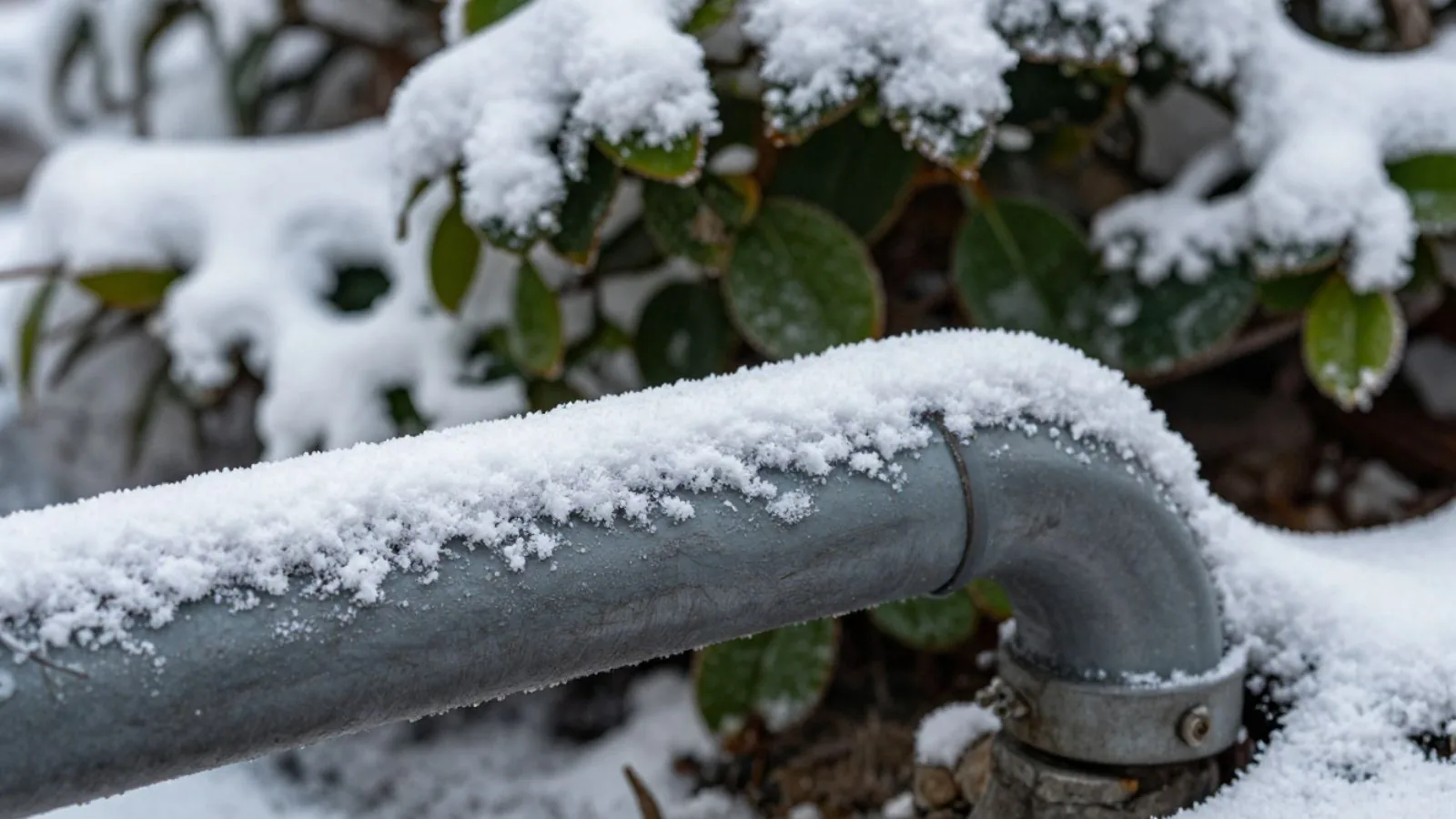
Frozen pipe water damage happens in two steps. Water inside a pipe freezes and expands until the pipe cracks, then the ice melts and the crack lets pressurized water into the wall, ceiling or floor. In Liberty, MO the second step is often the surprise, because a pipe can look fine while frozen and start spraying when the house warms up. The line is open 24/7 for emergencies like this.
If you find a thawing or leaking pipe, turn off the main water valve first. Then call, keep clear of any area where water meets outlets, and do not use a flame or torch to thaw anything near the wet area.
Frozen pipe emergency: thawed and leaking
The urgent moment is the thaw. As ice melts, water starts flowing out of the split, sometimes while nobody is home. Shut the main valve, open the bottom-level faucet to drain the system and check the exterior walls, garage, crawl space and attic first, because pipes in unheated spaces and along outside walls freeze most often.
Missouri winters bring freezing stretches, and the pipes most at risk are the ones in unconditioned spaces. If you cannot find where the water is coming from, say so when you call. Moisture mapping with meters and a thermal camera finds wet framing that cannot be seen.
Why a frozen pipe splits where it does
Water expands as it freezes, and the pressure builds between the ice blockage and a closed faucet. The pipe usually fails at that pressurized stretch, not where the ice formed. That is why a split can be a few feet from the visible frost, behind drywall or above a ceiling.
The result differs from a sudden burst pipe in one way. Frozen pipe damage often appears after a thaw and can run unnoticed in an empty house, so the water category and drying plan may be affected by how long it ran.
Pipe thawed and water is running?
Shut the main valve and call. Emergency lines are open overnight.
Cleanup after the thaw
The crew extracts standing water, removes wet insulation and drywall that cannot be dried in place, and sets air movers and dehumidifiers to dry what remains. In attics and crawl spaces, wet insulation loses much of its value and is often removed. See crawl space water damage when the split pipe is under the floor.
Moisture readings guide the work. Equipment stays in place until readings return to normal. A thermal camera is not a substitute for readings, but it shows where to look.
Thaw safety and what not to do
- Do not use an open flame, propane torch or heat gun on a frozen pipe near insulation or wood.
- Do not turn the water back on until the damaged section is repaired or isolated.
- Do not walk into a flooded room if water touches outlets, appliances or the panel.
- Do not ignore a quiet drip. It means water is still escaping inside a wall or floor.
A plumber handles the pipe repair. Restoration handles the water that got out.
Insurance after a frozen pipe
Many policies treat a sudden pipe freeze and burst as covered, and some add conditions about heating the house or draining pipes when the home is vacant. Ask your insurer which conditions apply to you. Photograph the split pipe and the wet areas, keep receipts for emergency steps and ask for a written scope with moisture readings.
Rebuild work may need a permit. The City of Liberty Building Inspections line is 816-439-4534.
The published standard behind this work
The drying plan for frozen pipe water damage follows ANSI/IICRC S500, the published industry standard for water damage restoration. It is a document anyone can look up, and it does not depend on trusting a company name. Among other things it covers how the water source is classified, how drying goals are set and how moisture readings are logged.
That gives you something concrete to ask for. Request the starting readings and the readings at each visit in writing, so the file shows what was wet, what dried and when the work was finished.
What affects frozen pipe cleanup
How long water ran
A thaw in an occupied house is caught quickly. One in a vacant house can run for days.
Where the pipe split
Attic, wall, ceiling and crawl space splits each wet different materials.
Insulation and drywall
Wet insulation and ceilings usually need removal rather than drying.
Rooms affected
Water that traveled across floors adds drying zones.
Rebuild scope
Replacing removed drywall and insulation is quoted separately from drying.
Call (833) 521-1033 once the pipe has split or thawed, and the scope and price are laid out before crews begin drying.
If you find a thawing pipe
Four actions come before the phone call finishes.
Close the main valve
Turn the main shutoff fully off and open the bottom-level faucet to drain pressure.
Check the cold spots
Look at exterior walls, the garage, crawl space and attic for wet spots and drips.
Protect the power
Stay clear of wet outlets and the panel. Switch off power only if you can do it from dry ground.
Document first
Photograph the split pipe and each wet area before cleanup.
Questions about frozen pipe water damage
Do you handle frozen pipe emergencies at night or on weekends in Liberty?
Yes. The line is answered around the clock, including overnight and holidays. Shut the water off at the main first and then call.
Can you thaw the pipe?
No. Pipe thawing and repair belong to a plumber. This service starts once the water is stopped and covers extraction, drying and cleanup.
Is it safe to wait until morning?
Running water should not wait. If the main valve is off and nothing is spreading, you may be able to wait for morning, and the call will help you decide.
Does insurance cover frozen pipe damage?
Often yes for a sudden burst, though some policies set conditions. Ask your insurer and read the exclusions in your policy.
Pipe thawed and leaking?
Whether the pipe has split or only frozen, the line can talk through what to do next.