
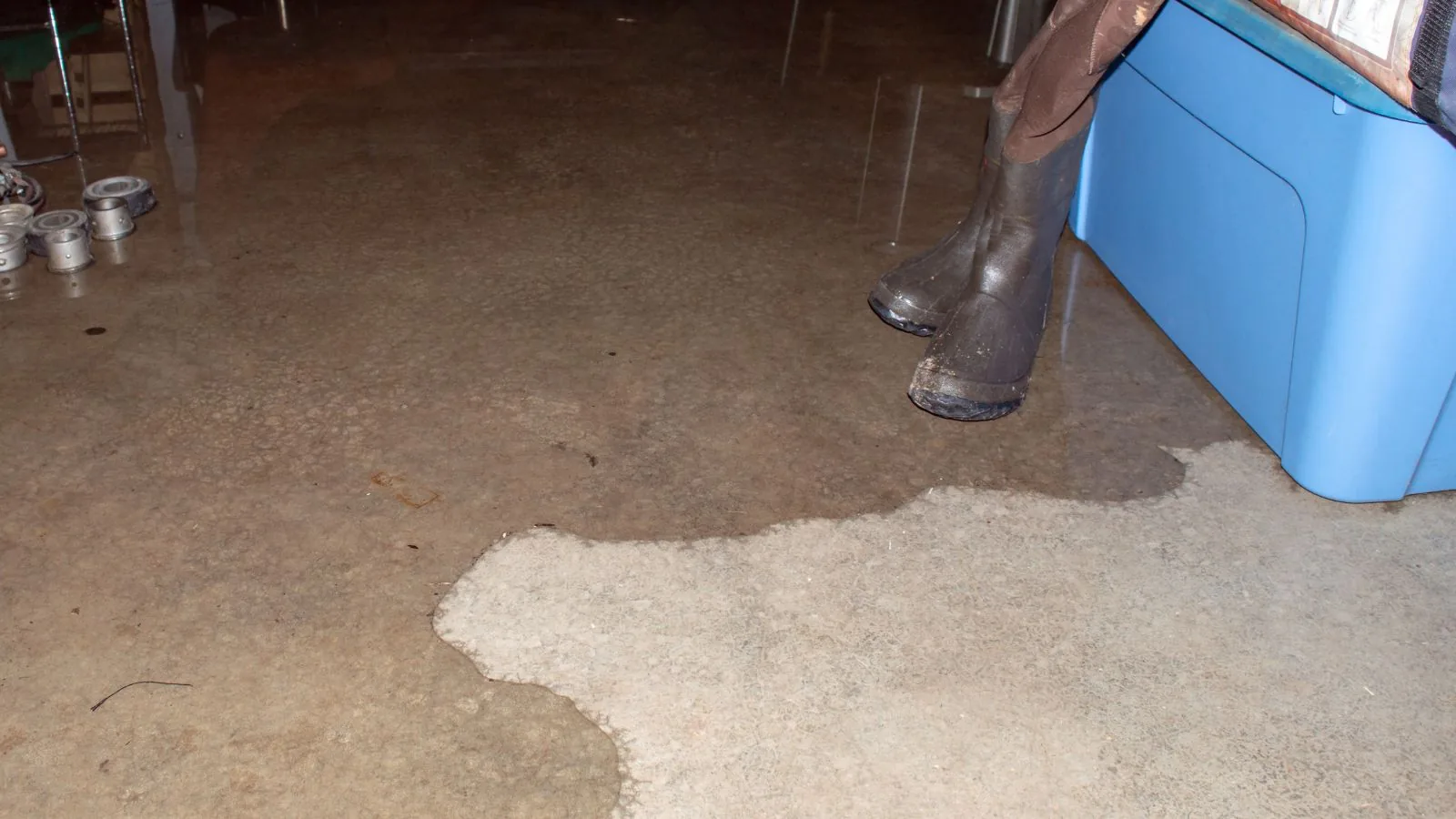
Basement water damage cleanup is the removal of water and the drying and cleaning of a below-grade room after flooding, seepage, a failed sump pump or a plumbing leak. If your Liberty, MO home has a basement, it is the low point of the house, so water ends up there first. Callers describe a basement flooded and musty after rain, and the line is open 24/7.
Do not go down to a flooded basement if the water may touch outlets, the furnace or the panel. Stay on dry stairs, turn off the water supply if a pipe is the cause, and call.
When basement water is an emergency
Several inches of water, water that keeps rising and any water touching electrical items are urgent. A basement with a furnace, water heater and panel combines water and electricity, and the first move is staying safe. A sewage smell points to contaminated water, which is covered on sewage backup cleanup.
If the water follows heavy rain, the National Weather Service advises not to enter floodwater. For rising outside water, see flood damage cleanup.
Where basement water comes from
- Rain that overwhelms drainage, comes through window wells or seeps through foundation cracks.
- A failed or overloaded sump pump.
- Plumbing leaks and burst lines, see burst pipe water damage.
- Water heater or appliance failure in a utility room.
- Drain backups through floor drains.
The source decides the water category and the cleanup plan.
Water in the basement?
Call any hour. Depth, source and finishes decide the plan.
Cleanup: extraction, removal and drying
Water is pumped out gradually, because removing it too quickly from saturated ground can stress walls. Finished basements lose carpet, pad, lower drywall and insulation when saturated. Concrete and block are cleaned and dried with air movers and dehumidifiers. Moisture readings confirm completion.
Dehumidification matters more in basements because air is humid and slow to move. See structural drying and dehumidification.
Cleanup is not waterproofing
Restoration cleans up damage. It does not stop water from entering. If water comes in after each rain, a foundation, grading or drainage contractor addresses the cause, and a sump pump replacement is a separate trade. Keep both jobs on your list so the cleanup is not repeated.
Callers often ask about waterproofing and foundation inspection. This line explains the restoration side honestly and points you to the right trade.
Basement mold and musty smells
A damp basement can develop a musty smell and mold on walls and stored items. Mold needs moisture, so drying quickly reduces the risk. For visible growth, see mold remediation.
Insurance varies. Sudden pipe failures are often covered, while seepage and flood often are not, so ask your insurer and photograph the water line on walls and belongings.
Finished and unfinished basements need different plans
An unfinished basement with bare concrete walls and a slab is simple to dry once the water is out. Surfaces can be pressure washed or wiped, sanitized if needed and dried with air movers and dehumidifiers. Stored items are the main concern, and shelving off the floor makes a big difference.
A finished basement is more complex. Carpet, pad, drywall, insulation, trim and sometimes built-in cabinets all sit against the wet slab or walls. Water wicks upward into drywall, and wet insulation behind it can hold moisture for a long time, so the scope often includes removing the bottom portion of walls.
Sump pumps, window wells and the water path
Many basement floods trace to a sump pump that failed, lost power or was overwhelmed, or to a window well that filled and leaked. Knowing the path helps decide what to protect first. A pump with a battery backup is a common precaution before storm season.
After cleanup, it is worth walking the outside of the house. Check that downspouts discharge away from the foundation, that soil slopes away from the walls and that window wells drain. Those fixes belong to a different trade, but they decide whether the basement gets wet again.
The published standard behind this work
The drying plan for basement water damage cleanup follows ANSI/IICRC S500, the published industry standard for water damage restoration. It is a document anyone can look up, and it does not depend on trusting a company name. Among other things it covers how the water source is classified, how drying goals are set and how moisture readings are logged.
That gives you something concrete to ask for. Request the starting readings and the readings at each visit in writing, so the file shows what was wet, what dried and when the work was finished.
What affects basement cleanup costs
Depth of water
Inches and feet are very different jobs.
Finished or unfinished
Finished basements have more material to remove.
Water category
Clean, gray and black water change the scope.
Contents
Stored belongings may need removal and sorting.
Rebuild scope
Flooring and drywall replacement are quoted separately.
Call (833) 521-1033 and describe the depth and what is stored below, and the extraction and drying scope is explained first.
Before the crew arrives
Basement water needs caution.
Stay off the stairs if water touches electrical
Do not wade into water near the furnace, heater or panel.
Stop the source
Shut off the water supply if a pipe or appliance is the cause.
Move what you can
Lift belongings from the bottom shelves if the area is dry.
Photograph the water line
Record the depth and the damage from the stairs.
Questions about basement water damage
Do you handle basement water emergencies at night or on weekends in Liberty?
Yes. The line is open 24 hours a day, including during storms.
Is restoration the same as waterproofing?
No. Restoration cleans up and dries. Stopping water from entering is a drainage or foundation job.
Do you replace sump pumps?
No. A plumber or waterproofing contractor handles pumps. This service covers cleanup and drying.
Will mold grow in a flooded basement?
It can if moisture stays. Fast extraction and drying lower the risk.
Basement flooded?
Stay off wet stairs near electrical service and call. The line explains the next steps.