
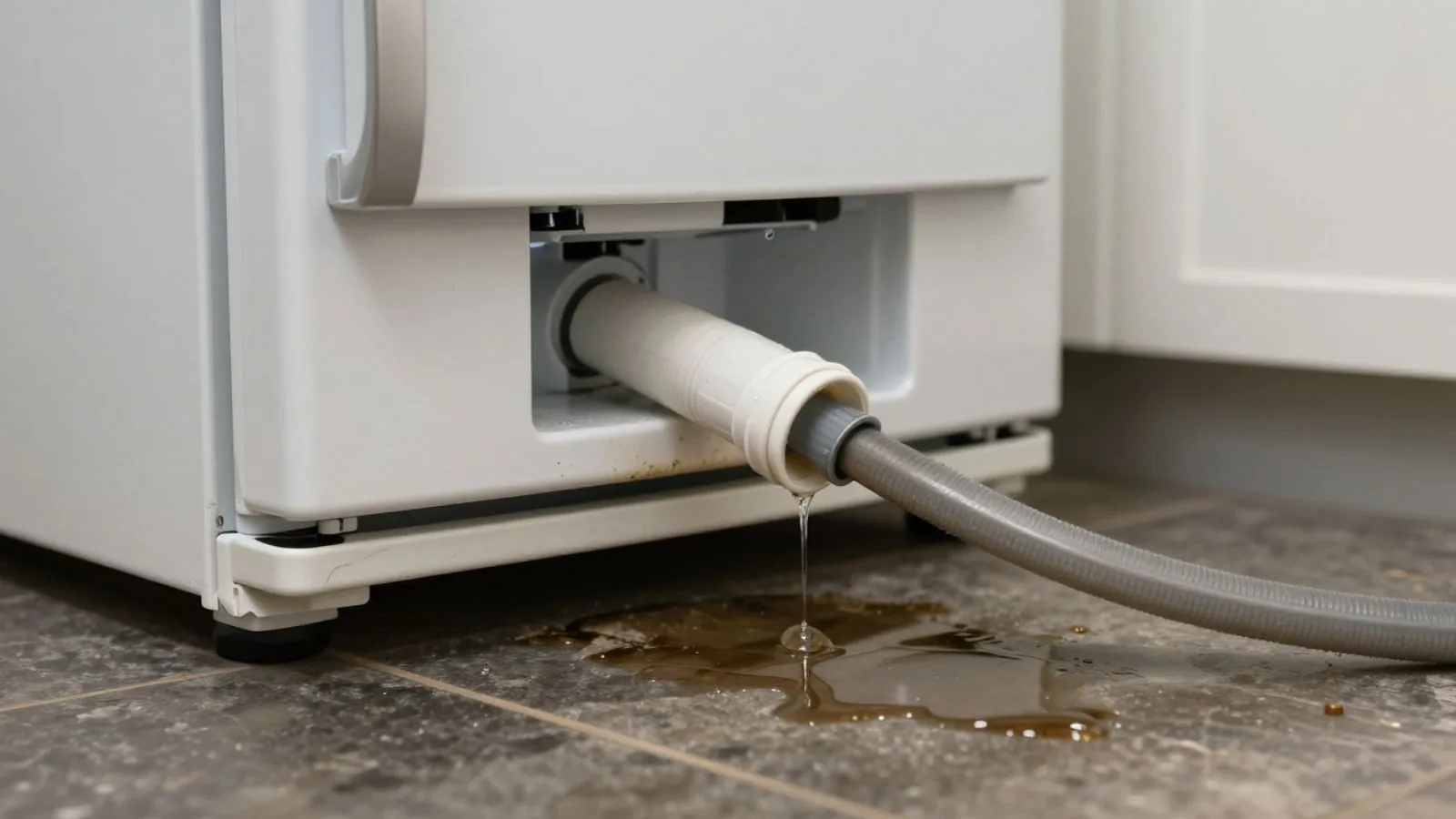
Appliance leak water damage is the wetting of floors, cabinets, walls and the floor system beneath an appliance when a hose, valve, pump or drain fails. In Liberty, MO homes the usual sources are a dishwasher supply or drain, a washing machine hose or valve and a refrigerator ice maker line, and the leak is frequently hidden behind or under the machine. This line is open 24/7.
Unplug the appliance if the cord is dry and reachable, close its shutoff valve, and pull the unit away from the wall only if the floor is safe to stand on. Wet floors near the appliance can hide a flow of water under flooring.
Appliance leak emergency: stop the flow first
Each appliance has its own shutoff. Washing machines have two hose valves, usually on the wall behind the machine. Dishwashers have a supply valve under the adjacent sink. Refrigerator ice makers run on a small line with a saddle valve or a stop valve in the wall, basement or cabinet.
If you cannot find the valve, close the main. A leak that has run overnight can reach flooring and subfloor, so call before assuming the damage is small.
Where appliance water goes
Water from a washing machine runs across the laundry floor, under baseboards and into walls. Dishwasher water goes under cabinets and toe kicks and into the subfloor below. Refrigerator lines can leak behind the unit for days, wetting flooring and cabinet sides. When the appliance is upstairs, the water can come through the floor and show on the ceiling below.
The cabinet and sink-area part of this problem is covered on the kitchen water damage restoration page, while floors are covered on hardwood floor and carpet pages.
Appliance leaked overnight?
Shut off its valve and call the 24/7 line.
Which appliances leak, and how
| Appliance | Common failure | Where water ends up |
|---|---|---|
| Dishwasher | Supply line, door seal, drain hose | Under cabinets, in the subfloor |
| Washing machine | Supply hose or valve, drain standpipe overflow | Laundry floor, wall bases, rooms below |
| Refrigerator | Ice maker supply line, drain pan | Behind the unit, kitchen flooring |
| Water softener, sink disposal | Fittings, seals | Utility closet, under-sink cabinet |
A neighbor or a tenant above you can also be the source, which changes who handles the repair.
Drying and cleanup
Extraction comes first if there is standing water, then moisture mapping to find water under flooring and inside cabinet bases. Toe kicks and baseboards are often removed so air can reach the cavity. Air movers and dehumidifiers dry the area, and hard-to-reach water under cabinets may need small drilled drain holes to let air in.
The structural drying page explains equipment and monitoring. Drying is complete when readings match unaffected areas, not before.
Insurance and who pays
Sudden appliance leaks are often covered, but slow leaks that went on for weeks often are not, so notes on when you noticed the problem matter. Photograph the appliance, the failed hose and the wet floor, keep the part that failed and ask your insurer about the process. If a leak came from a neighbor or landlord property, tell the person responsible and keep your own record.
The published standard behind this work
The drying plan for appliance leak water damage follows ANSI/IICRC S500, the published industry standard for water damage restoration. It is a document anyone can look up, and it does not depend on trusting a company name. Among other things it covers how the water source is classified, how drying goals are set and how moisture readings are logged.
That gives you something concrete to ask for. Request the starting readings and the readings at each visit in writing, so the file shows what was wet, what dried and when the work was finished.
What affects appliance leak costs
How long it leaked
A single cycle and several weeks of seepage leave different damage.
Flooring
Tile, vinyl, hardwood and carpet each have their own response.
Cabinet involvement
Cabinet bases and toe kicks add removal and drying.
Level of the home
Water that reached a floor below widens the job.
Rebuild scope
Replacing flooring and trim is quoted after drying.
Give the line the appliance and the rooms touched at (833) 521-1033, and the scope is explained before any cabinets or floors come out.
Before the crew arrives
Stop the flow and protect the floor.
Close the valve
Close the appliance valve or the main if you cannot find it.
Unplug carefully
Unplug only if the cord and outlet are dry.
Lift items
Move food, rugs and small items out of the wet zone.
Photograph
Record the appliance, the hose and the wet floor.
Questions about appliance leak water damage
Do you handle appliance leak emergencies at night or on weekends in Liberty?
Yes. The line is open 24 hours a day. Shut off the appliance valve and call.
Do you repair the appliance?
No. An appliance technician or plumber handles the appliance. This service covers water removal, drying and cleanup.
Can water hide under my flooring?
Yes. Moisture meters and a thermal camera find water under flooring and inside cabinet bases.
Is a washer or dishwasher leak covered?
Sudden failures are often covered and long-term leaks often are not. Ask your insurer.
Appliance leaked?
Unplug and shut off the supply if it is safe, then call and describe the rooms affected.