
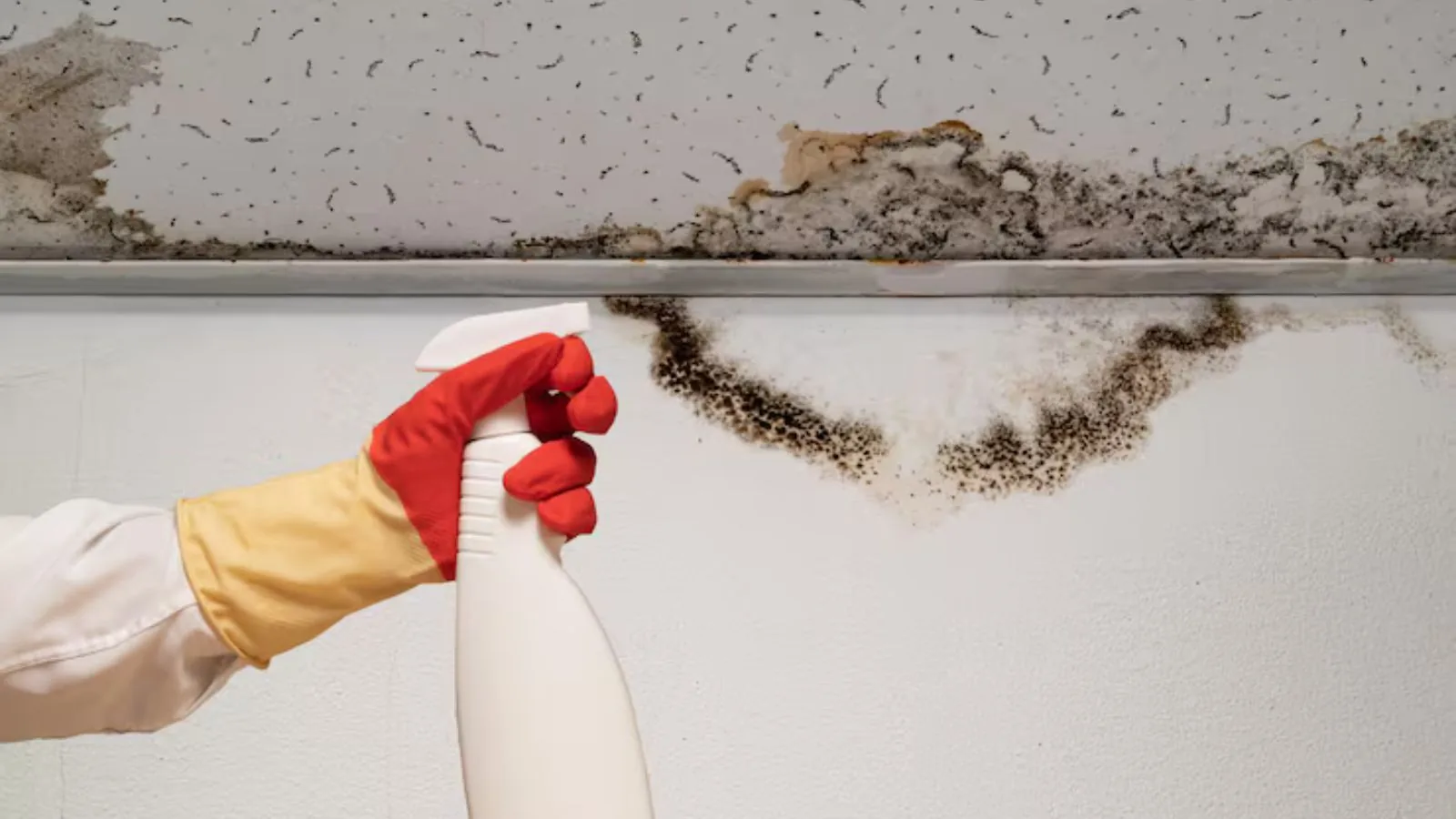
Mold remediation is the controlled removal of mold growth and the correction of the moisture that allowed it, following the ANSI/IICRC S520 standard for professional mold remediation. In Liberty, MO homes mold shows up after leaks, in bathrooms and closets, behind furniture and under lifted carpet, and sometimes only when a wall is opened during a remodel. The line is open 24/7, and this page is a secondary service to the water damage work.
Do not scrub, spray or fan the mold. Disturbing it can spread spores. Stop the moisture source if you can and call.
I found mold: what do I do now?
People usually phrase it as a dark patch on a wall, a musty smell in a closet or a surface that turned fuzzy after a leak. First, stop adding moisture by fixing or shutting off the leak. Keep the area closed off and avoid sweeping, vacuuming or fanning it. Take photographs.
The trade name for the fix is mold remediation. It starts by finding why the area was wet, because removing mold without fixing moisture invites it back.
Why mold grows and what it needs
Mold needs moisture, organic material such as drywall paper or wood, and time. Water left in a material after a leak provides the first, and building materials provide the second. That is why drying quickly after water damage is the strongest step against mold, and why this page links to structural drying and dehumidification.
This site does not make health claims about mold or diagnose anything. If you have health questions, ask a physician.
Found mold after a leak?
Call the line. The first call covers where it is and what caused the moisture.
How remediation works
- Inspection and moisture assessment to find the extent and the cause.
- Containment with plastic sheeting and negative air to keep spores in the work area.
- Removal of materials that cannot be cleaned, such as soft drywall and carpet.
- HEPA vacuuming and cleaning of surfaces that stay.
- Drying to normal readings and a final check before rebuilding.
Crews wear protective gear and the work is done to the S520 standard, which you can ask any company about.
Testing, inspection and clearance
Callers often ask about testing. A visual inspection and moisture readings are the usual first step. Sampling can show what is present, and clearance testing after remediation can show that the area meets the target. Independent testing by a third party avoids a conflict of interest, since the same company should not both remediate and certify its own work.
Ask whether your state licenses mold assessors or remediators, and ask any company you hire to explain its testing approach.
Where mold is usually found after leaks
| Location | Usual cause | Related page |
|---|---|---|
| Bathroom walls and ceilings | Leak or ventilation | Wall and drywall water damage |
| Closets near an air handler | Condensate leak | AC leak water damage |
| Under lifted carpet | Spill or flood | Carpet water damage |
| Basements and crawl spaces | Seepage, flood, plumbing | Basement water damage |
The cause decides how the area is dried and rebuilt.
Selling or buying a home with mold
A lender or buyer may ask for mold to be addressed before closing. Remediation and a clearance report can document the work, but nothing here promises that a lender or buyer will accept it. Ask your agent and lender what they require.
Insurance for mold varies a lot and often depends on the cause of the water. Ask your insurer before work begins.
What affects mold remediation costs
Area affected
Square footage and wall height set containment and labor.
Materials involved
Drywall, carpet and framing are treated differently.
Containment needs
Larger areas and occupied homes need more control.
Testing
Inspection and clearance testing are priced separately.
Moisture source
Fixing the leak or ventilation problem is its own trade.
Call (833) 521-1033 and describe where growth showed up and what caused the moisture, and the containment and removal scope is explained first.
Before you call
A few steps keep the problem from spreading.
Stop the moisture
Shut off or repair the leak if you can do so safely.
Leave it alone
Do not scrub, spray bleach or run fans on it.
Seal the room
Close the door and turn off the HVAC if the room shares it.
Photograph
Record the area and any stains or smells.
Questions about mold remediation
What should I do when I find mold in my house?
Stop the moisture, avoid disturbing the growth, keep the room closed and call. The first call covers where it is and what likely caused it.
Do you test for mold?
Inspection and moisture assessment are part of the work. Independent testing for clearance can be arranged, and a third party is recommended for that step.
Will mold come back?
Nobody can promise it will not. Fixing the moisture and drying the structure is what lowers the chance.
Does my home sale need mold remediation?
It depends on what the buyer or lender requires. Ask your agent and lender, and keep records of the work.
Found mold after a leak?
Leave the growth alone and call. The first conversation covers where it is and why.