
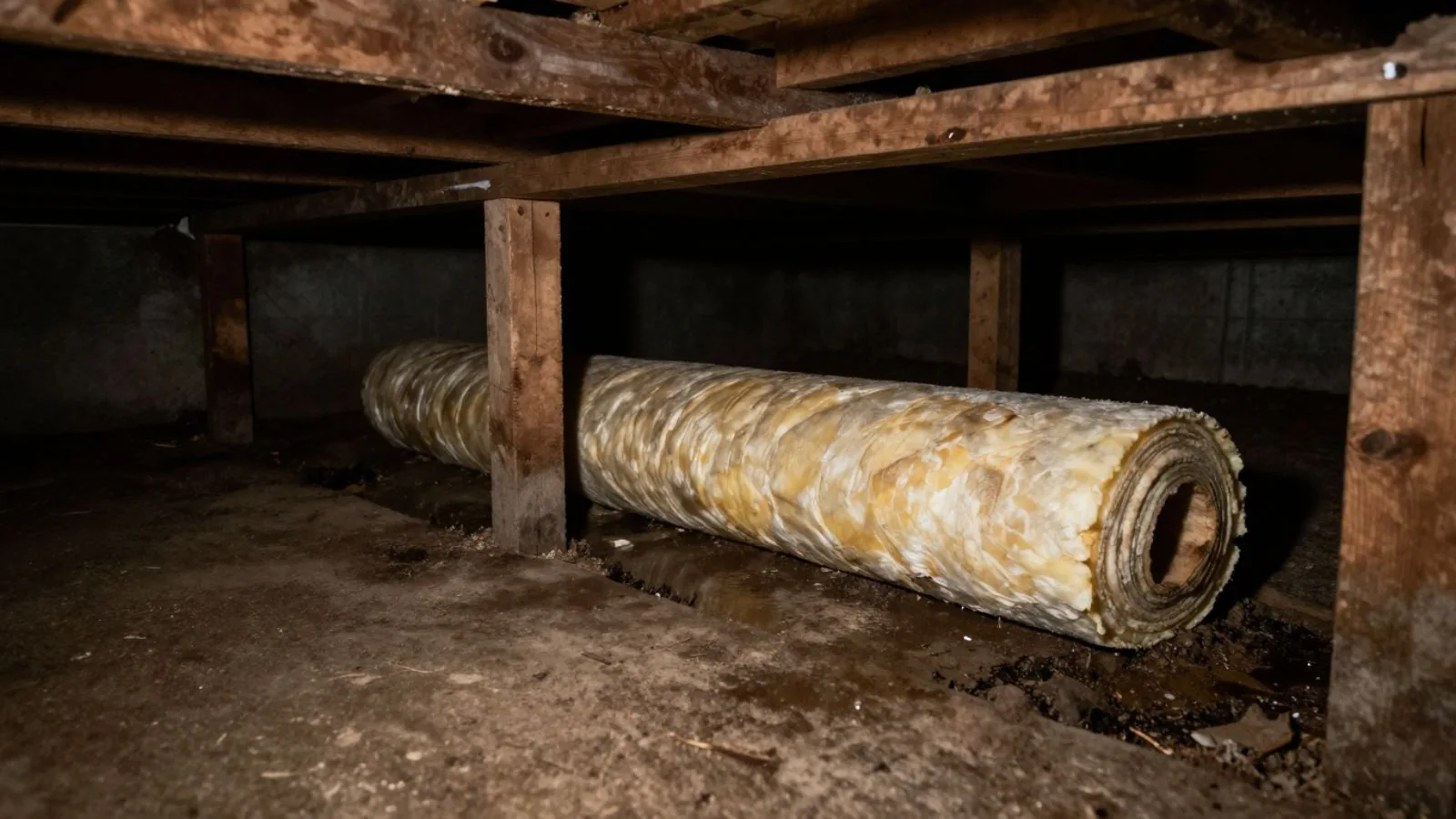
Crawl space water damage is the wetting of the unfinished space under a floor, including soil, insulation, joists, subfloor and any ductwork or wiring. Not every Liberty, MO home has a crawl space, and some have only a partial one under an addition or porch. Where one exists, water from a broken irrigation line, a plumbing leak or heavy rain can stand there for days without notice. The call line is open 24/7.
Do not enter a crawl space with standing water if wiring or equipment is exposed. Take photographs from the access hatch and call.
How water gets under a house
Callers have described crawl spaces flooded by a broken irrigation line and by an irrigation backflow. Other sources include supply and drain leaks, a failed water heater line, groundwater after rain and vents or openings that let runoff in. Each source differs in contamination and in how it should be stopped.
The plumbing or irrigation leak must be repaired by the proper trade. Restoration removes the water and dries what it reached.
What a wet crawl space damages
- Insulation between joists absorbs and holds water and usually must be removed.
- Wood joists and subfloor swell and can grow mold when moisture stays.
- Ductwork and wiring may be affected if they sit low.
- Vapor barrier plastic can trap water against soil.
The living space above can feel it too. Floors may cup or feel soft, and the house may smell musty. The hardwood floor page explains what happens to the flooring above.
Water under the house?
Call the 24/7 line before you go under it.
Cleanup and drying under the floor
Standing water is pumped out first. Wet insulation is removed and bagged, and joists and subfloor are dried with air movers and dehumidifiers sized for the void. Moisture readings in the wood confirm when drying is finished. Where growth is visible, the work follows the containment steps described on the mold remediation page.
Restoration cleans up a wet crawl space. It does not regrade soil, install drains or encapsulate. If the same space floods after each rain, that points to a drainage fix that falls outside this service.
Safety in a crawl space
Crawl spaces are tight, dark and sometimes electrified. Crews use lighting, protective gear and careful access. Homeowners should avoid going in if there is standing water with wiring, if the space smells of sewage or if anyone has breathing trouble. For sewage, see sewage backup cleanup.
Insurance and documentation
Policy coverage depends on the cause. A sudden pipe failure may be covered, rain seepage and long-term dampness often are not. Ask your insurer, photograph the space from the hatch and keep records of any irrigation or plumbing repairs.
Vapor barriers, insulation and ventilation under the floor
Many crawl spaces have a plastic vapor barrier over the soil, insulation between the floor joists and vents in the foundation walls. Each of those can fail in a water event. A torn or displaced barrier lets ground moisture rise. Wet insulation sags, holds water against the subfloor and loses its value.
During cleanup, crews check the condition of each. Insulation that has been soaked is usually removed and replaced. The barrier is repaired or replaced where it is torn. These repairs matter because a dry crawl space that is still open to ground moisture can wet again.
Signs from inside the house that the crawl space is wet
People often learn about a wet crawl space from upstairs. Common clues include a musty odor that is strongest near floor vents, floors that feel soft or spongy over one area, cupping hardwood and a rise in humidity in the rooms above. Sagging insulation visible from a small access door is another sign.
If you notice any of these, look at the access hatch and listen for dripping. Do not crawl into standing water near electrical lines. Call and describe what you see so the right gear and plan are ready.
The published standard behind this work
The drying plan for crawl space water damage follows ANSI/IICRC S500, the published industry standard for water damage restoration. It is a document anyone can look up, and it does not depend on trusting a company name. Among other things it covers how the water source is classified, how drying goals are set and how moisture readings are logged.
That gives you something concrete to ask for. Request the starting readings and the readings at each visit in writing, so the file shows what was wet, what dried and when the work was finished.
What affects crawl space cleanup costs
Water volume
Several inches across the whole space differs from a puddle in one corner.
Insulation
Removing and replacing insulation adds labor and materials.
Access
Tight hatches slow equipment movement.
Mold presence
Visible growth adds containment and removal.
Source repair
The plumbing or drainage repair is a separate trade and price.
Call (833) 521-1033 and describe what you can see from the access hatch, and the crew plans equipment and gear before arriving.
Before the crew arrives
Stay safe and gather information.
Find the source
Shut off the irrigation or water supply if it may be the cause.
Stay out of live areas
Do not enter if water meets wiring or equipment.
Photograph from the hatch
Take wide and close photos of the water and insulation.
Note the history
Record when you noticed it and what changed recently.
Questions about crawl space water damage
Does a wet crawl space need an emergency call?
Active flooding and water near wiring do. A small damp area can wait for business hours, though the line is open 24/7.
Do you waterproof or encapsulate crawl spaces?
No. Restoration removes water and dries the structure. Drainage and encapsulation are separate trades.
Will insulation need replacing?
Wet insulation is usually removed, since it holds water against the joists.
Can mold grow in a wet crawl space?
Yes, if moisture stays. Prompt extraction and drying lower the risk.
Water under the house?
Stay out of standing water near wiring and call. The crew plans gear before arriving.