
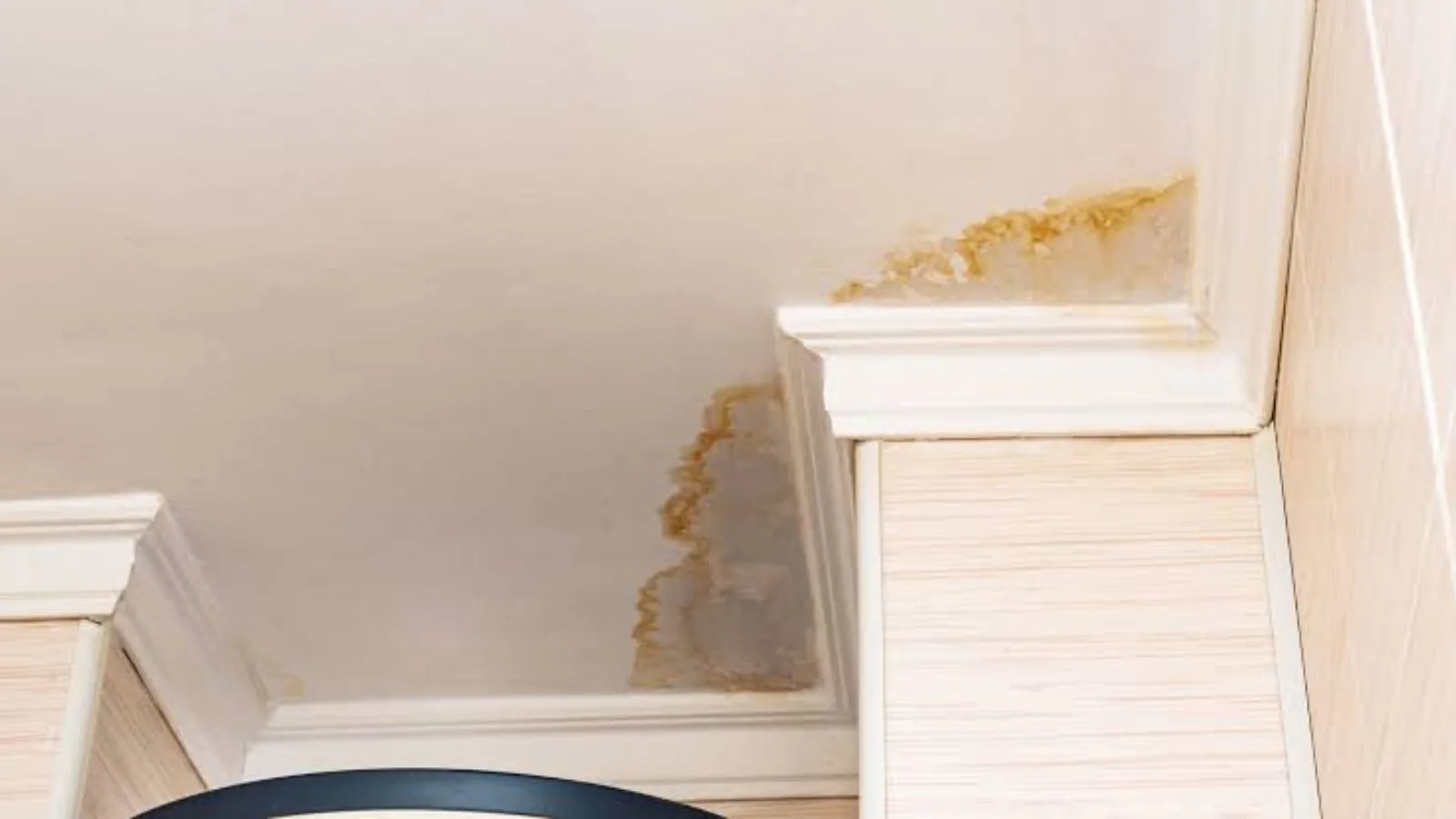
Whether water damage is new or long-standing changes what you should do and how an insurer may treat it. A burst pipe last night is an emergency. A slow leak that has run for a season is a repair problem with possible mold. Telling them apart is not always easy, and no homeowner can date a stain precisely.
This guide lists the common signs of each so you can describe what you see to a professional. It is a guide for observation, not a way to prove timing.
Signs that water damage is recent
- Materials are wet, cold or dripping.
- Paint or wallpaper is bubbling but not yet cracked or peeling.
- Drywall is soft and swollen but still intact.
- Stains have soft, dark edges and no rings.
- Carpet is soaked and squishy, with no stiff dried patches.
- There is little or no odor yet.
Recent damage is time sensitive. The sooner water is removed, the more can be saved.
Signs that water damage is long-standing
- Stains with multiple rings or tide marks, showing repeated wetting and drying.
- Peeling, flaking or cracked paint.
- Rust stains on nails, screws or metal fasteners.
- Warped, cupped or delaminated flooring and trim.
- A persistent musty odor.
- Visible mold or dark growth.
These signs suggest that moisture has been present for a long time, even if it is dry on the day you look.
Stain on your wall or ceiling?
Staring at a stain? Call and describe its edges, colors and smell.
Why a dry stain does not mean the problem is over
A stain can look dry because the leak is intermittent. A roof that leaks only in wind-driven rain or a pipe that drips only when a fixture runs can leave a stain that dries between events. Moisture inside the wall may still be present.
Moisture meters and thermal imaging check what the eye cannot. The method is covered in structural drying and dehumidification.
Where hidden damage tends to show up
Check the ceiling below bathrooms and kitchens, the walls beside showers and water heaters, the floor around toilets and dishwashers and the cabinet under sinks. A baseboard that has swollen or a floor that feels spongy often points to a wet area below.
Ceiling stains are covered on ceiling water damage repair, and wall and drywall damage on wall and drywall water damage repair.
Why the difference matters for insurance
Many policies treat sudden and accidental water damage differently from gradual leakage over weeks or months. Evidence of long-term damage can lead an insurer to question coverage. Evidence that a failure was sudden helps explain it.
This is why photographs, dates and honest notes are valuable. Nothing here predicts a decision. Your policy and insurer decide.
Why the difference matters for repairs
Recent damage may be saved by fast extraction and drying. Long-standing damage often needs removal of affected materials, a fix for the source and mold checks. Treating an old problem like a new one wastes effort, and treating a new one like an old one throws away materials that could have been saved.
A crew starts with readings, not guesses.
When you are buying or selling a home
Stains on ceilings and walls often come up in inspections. A sale is easier when the source is identified and fixed and the area is dried and documented. Painting over a stain without repair is a poor idea, because it hides evidence and leaves the cause in place.
A moisture inspection can show whether an old stain is still active.
A room-by-room walk-through
Walk each room slowly with a flashlight. In the bathroom, check the ceiling below the shower, the base of the toilet and the cabinet under the sink. In the kitchen, look at the dishwasher edge, the refrigerator line and the cabinet floor. In the laundry room, check hose connections and the floor around the washer.
In bedrooms and hallways, look for ceiling stains and wall bubbles. In the basement, check corners, the bottom of walls and the base of the water heater. Photograph anything suspicious with a coin or ruler for scale, so you can show how it changes over time.
The standard behind this advice
The steps in this guide line up with ANSI/IICRC S500, the published industry standard for water damage restoration. The standard is a reference document, so you can look up how it treats classification, drying goals and documentation.
It does not replace a site visit. Conditions in a specific house decide what applies, which is why readings taken on the day matter more than any rule of thumb.
Liberty and Clay County local note
Liberty has houses built across a long span. The Jewell-Lightburne Historic District, listed in 2001, counts 236 contributing buildings dated about 1852 to 1946, and the Dougherty-Prospect Heights district counts 139 from about 1850 to 1946. In houses that old, a long-term leak can hide behind layers of paint, plaster and later repairs.
The Clay County Courthouse on the Liberty Square, built in 1935 and 1936, is a reminder that this area has buildings of many eras. If you are buying a house near the Square, ask for moisture readings alongside the usual inspection.
Older houses turn up in other towns too, and the line takes calls from Smithville and Independence.
Frequently asked questions
Can a stain tell me exactly how old the leak is?
No. Rings, edges and materials give clues, but they do not give a date. Moisture readings and a professional look are better.
If the wall is dry, is the problem gone?
Not necessarily. An intermittent leak can leave a dry stain with moisture inside the wall at other times.
Will an insurer treat old damage differently?
Often yes. Many policies exclude long-term seepage and cover sudden events.
Are older Liberty houses more likely to hide leaks?
They can be, because plaster, old pipe and layers of repairs make leaks harder to see.
Stain that will not go away?
Call and readings can show whether it is still active.