
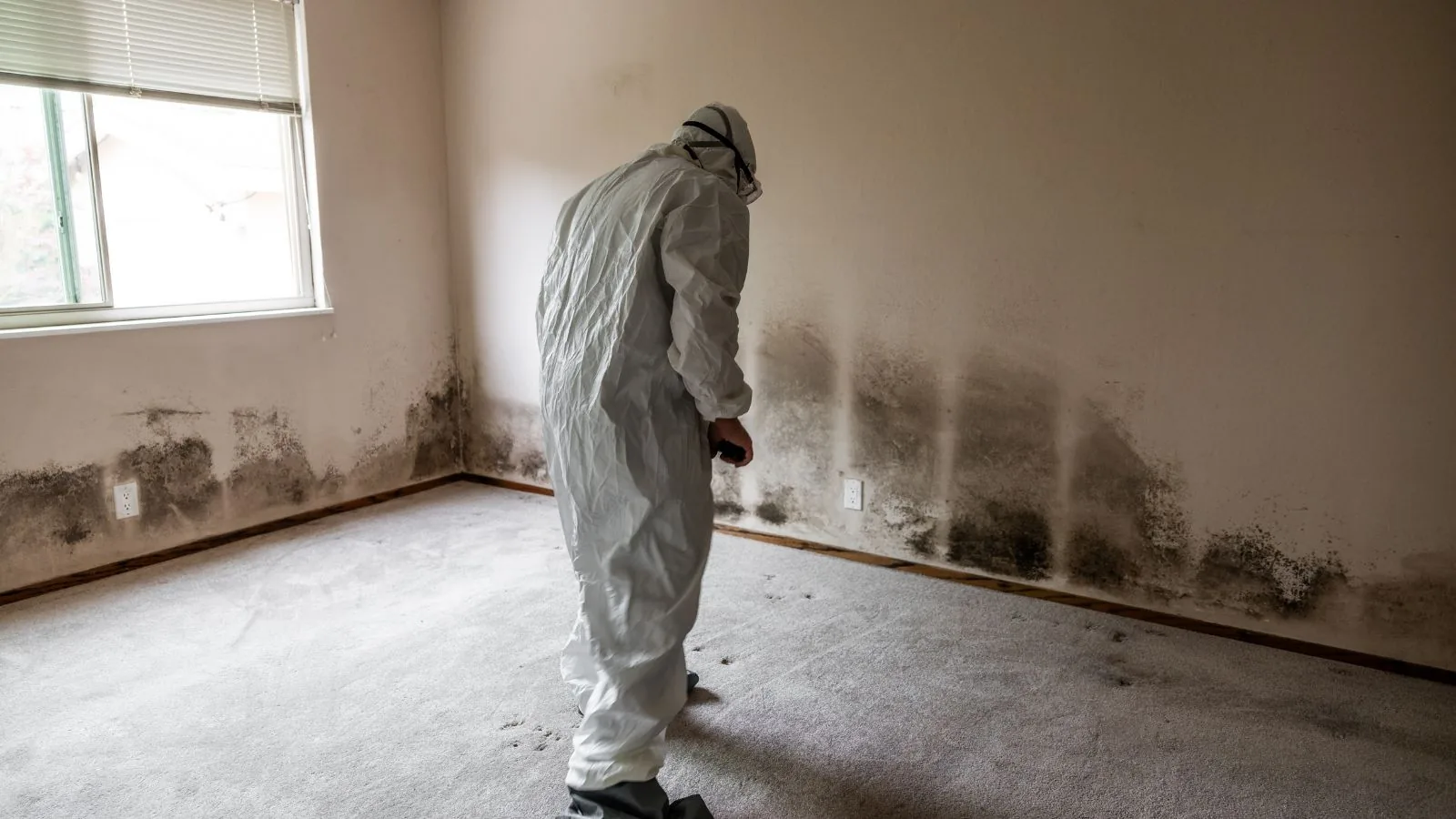
A gray film on a shower wall, a fuzzy patch on a closet shelf, a dark spot on a basement block. People call these mold or mildew without much distinction. The words overlap, and what matters most is that each one is a sign that moisture has been present.
This guide explains how the terms are generally used, how to tell them apart by sight and smell and what is reasonable to clean yourself.
What people usually mean by mildew
Mildew is a common name for early surface mold growth. It tends to be flat, powdery or downy and white, gray or yellowish. It appears on damp surfaces such as shower tiles, window sills and fabric left in a humid space.
It is often easy to wipe away and is a surface problem, though it still shows that humidity or moisture is too high.
What people usually mean by mold
Mold is the broader word for fungal growth. It can be fuzzy, slimy or speckled and appear in black, green, blue, white or other colors. It often grows into materials such as drywall, wood and insulation, not just on the surface.
Growth in building materials is harder to remove than a surface film, and it usually signals a bigger or longer-lasting moisture problem.
Growth keeps coming back?
Growth that keeps returning? Call and describe where it shows up.
A quick comparison
| Feature | Mildew (surface growth) | Mold (established growth) |
|---|---|---|
| Look | Flat, powdery or downy, light colors | Fuzzy, slimy or speckled, many colors |
| Where | Tile, glass, fabric, painted surfaces | Drywall, wood, insulation, carpet |
| Smell | Light musty odor | Stronger musty or earthy odor |
| Typical cause | Humidity and condensation | Leaks, floods and long-term moisture |
| Usual response | Clean surface, reduce humidity | Fix moisture, may need removal |
Color is not a reliable way to tell the type, and a laboratory is needed to identify species.
What you can reasonably clean yourself
Light surface growth on hard, non-porous materials such as tile, glass and sealed counters can usually be cleaned with detergent and water. Wear gloves, keep the area ventilated and do not mix cleaning products. Then dry the surface completely.
EPA guidance suggests that small areas, roughly under 10 square feet, can often be handled by a homeowner. Soft materials with growth are usually removed instead.
When it is more than mildew
Call for help when growth returns after cleaning, covers a large area, sits behind walls or follows a flood, leak or sewage backup. A musty smell with no visible source is another sign of hidden moisture.
Read mold remediation to see how professionals handle it, and water extraction if the cause was a leak.
Fixing the humidity behind both
Use exhaust fans in bathrooms and kitchens and vent them outside. Wipe down shower walls. Keep indoor humidity between 30 and 50 percent, which EPA guidance supports, and run a dehumidifier in humid months. Fix leaks quickly and dry wet items within a day or two.
Move furniture slightly away from exterior walls to allow airflow, and clean gutters so water drains away from the house.
A note on health questions
This site does not make health claims and cannot diagnose anything. Anyone with health questions about exposure should talk with a physician. The most useful thing any homeowner can do is remove moisture and growth.
If you are unsure whether what you see is mold, treat it as moisture first.
Where each tends to show up around the house
Surface growth often appears in bathrooms, on window sills with condensation, on shower curtains and on shoes or fabric stored in damp closets. Established growth tends to show up in basements, behind or under sinks, along exterior walls and ceilings below a roof or plumbing leak.
Seasonal patterns help. Summer humidity pushes growth in basements. Winter condensation on cold windows leads to growth on sills and frames. Noting when growth appears can point you to the moisture source and what to fix.
A simple routine to keep both away
Make a monthly habit of checking the places where growth starts: under sinks, around windows, in the basement corners and in closets on exterior walls. Look for damp spots, stains and smells. Catching it early means a cloth and a dehumidifier instead of a removal project.
After any leak, dry the area quickly and keep an eye on it for a few weeks. If a smell returns, assume moisture is still present and look for the source.
The standard behind this advice
The steps in this guide line up with ANSI/IICRC S520, the published industry standard for mold remediation. The standard is a reference document, so you can look up how it treats classification, drying goals and documentation.
It does not replace a site visit. Conditions in a specific house decide what applies, which is why readings taken on the day matter more than any rule of thumb.
Liberty and Clay County local note
Missouri summers are humid, and Liberty homes with older basements and tight bathrooms see condensation on cold surfaces. Houses in the Jewell-Lightburne district, built between about 1852 and 1946, were not designed with modern ventilation, so bathrooms and closets are common spots for surface growth.
If a leak caused the growth, check whether a break in the city line or in your own plumbing is to blame. The City of Liberty operates its own water utility, and a bill that jumps can be an early clue.
Humid summers affect Independence and Kearney as well, so the same habits help there.
Frequently asked questions
Is mildew less serious than mold?
Surface mildew is usually easier to clean, but both signal moisture. Fix the cause either way.
Can I tell mold type by color?
No. Color is not reliable, and only a laboratory can identify species.
Is bleach the right cleaner?
It is not a good choice for porous surfaces and must never be mixed with other cleaners. Detergent and water work on hard surfaces.
Why does my Liberty bathroom keep getting mildew?
Usually humidity. Check the exhaust fan, vent it outside and wipe the walls after showers.
Not sure what you are seeing?
Call and describe the color, texture and smell.