
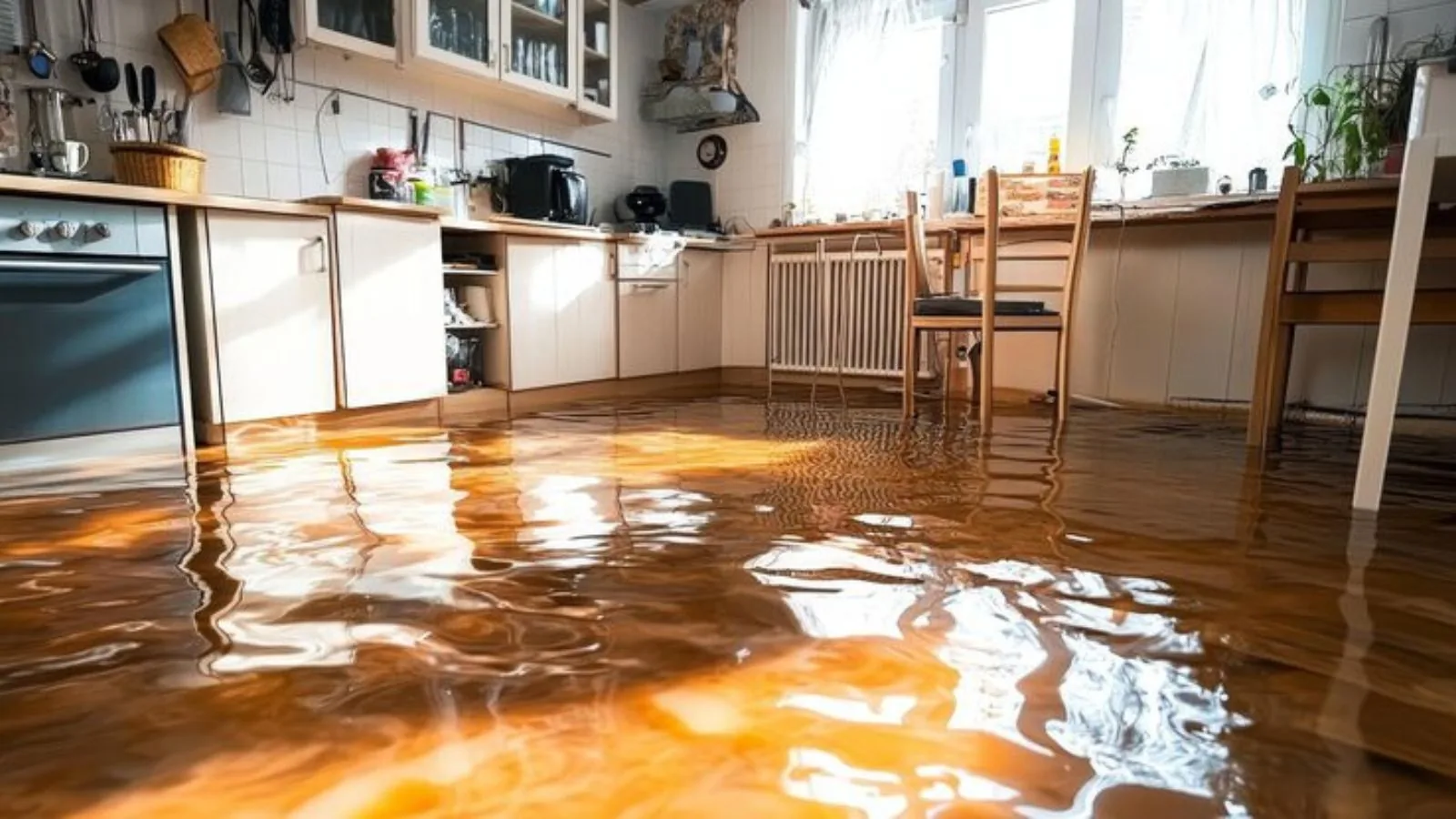
Not every water problem arrives with a splash. Some leaks drip inside a wall, under a slab or above a ceiling and show up only as a stain, a smell or a higher water bill. By the time the damage is visible, materials may have been wet for a long time.
This guide lists checks you can do without special tools. If they point to a leak, stop using the affected line and call a plumber and, if water has spread, a restoration crew.
Read your water meter
The water meter is the most reliable first test. Turn off every fixture and appliance that uses water. Find the meter, usually in a box near the street or in the basement, and look at the leak indicator, often a small triangle or dial. If it moves while nothing is running, water is going somewhere.
Write down the reading, wait a couple of hours without using water and read it again. A change confirms a leak between the meter and your fixtures.
Watch your bill
A bill that jumps without a change in habits can signal a hidden leak. Compare the same season year over year. A running toilet, a dripping irrigation line or a leak in a supply pipe can raise usage quietly.
If your bill looks wrong, ask your water utility whether there is a pattern in the readings. It is a useful clue but not proof.
Water found where it should not be?
Meter moving with every tap off? Call once you find water that has spread.
Check the usual suspects
- Toilets: add food coloring to the tank and see whether it shows in the bowl without flushing.
- Under sinks: feel pipes and the cabinet floor for dampness.
- Appliance lines: check the washer, dishwasher and ice maker hoses.
- Water heater: look for rust, drips or a wet floor.
- Outdoor spigots and irrigation: check for wet soil near the foundation.
Look and smell for clues
Stains on ceilings and walls, bubbling paint, warped baseboards and soft floors are visible clues. A musty smell with no obvious source can mean moisture in a wall or crawl space. A sound of running water when all fixtures are off is another sign.
Warm spots on a floor may point to a hot water line leak under a slab. See slab leak water damage for what that involves.
Hidden leaks in ceilings and walls
Leaks from upstairs bathrooms and roofs often appear first as a ceiling stain. Do not poke at a bulging ceiling, because it can fall and release water. Keep people out of the area and call.
Ceiling stains are explained on ceiling water damage repair, and wet walls on wall and drywall water damage repair.
What professionals use
Plumbers use acoustic listening devices, pressure tests and camera inspections to find leaks in pipes. Restoration crews use moisture meters and thermal cameras to find where the water went. The two jobs often happen together, since the source must be fixed and the structure dried.
A crew maps moisture before opening anything. Structural drying and dehumidification covers what comes next.
When to shut off the main
If you find active water that you cannot stop at a fixture valve, shut off the main water valve. Know where it is before you need it. Turn off the water heater if the leak is in a hot line and the tank may drain.
Never touch electrical equipment standing in water. If you smell gas or see sparks, leave and call 911.
Leak types and their telltale signs
| Leak type | Common sign | First check |
|---|---|---|
| Supply line in a wall | Stain or bubbling paint, rising water bill | Water meter test with all fixtures off |
| Drain line leak | Musty smell, stain below a bathroom | Look under sinks and in the ceiling below |
| Slab leak | Warm floor spots, sound of running water | Meter test and a plumber with listening gear |
| Roof leak | Stain that grows after rain | Attic check after a storm |
| Appliance line | Damp floor near the machine | Pull the appliance and inspect the hoses |
A table like this is a starting point. Real leaks overlap, so combine clues and measure with a meter before you decide.
The standard behind this advice
The steps in this guide line up with ANSI/IICRC S500, the published industry standard for water damage restoration. The standard is a reference document, so you can look up how it treats classification, drying goals and documentation.
It does not replace a site visit. Conditions in a specific house decide what applies, which is why readings taken on the day matter more than any rule of thumb.
Liberty and Clay County local note
The City of Liberty operates its own water and wastewater utilities, so your meter and your bill come from the city. If your meter shows movement with all fixtures off, the leak is on your side of the meter, and that is yours to fix.
If you think the leak is in the public line outside your property, use the city’s non-emergency dispatch line at 816-439-4701. Older Liberty homes in the Jewell-Lightburne and Dougherty-Prospect Heights districts may have original plumbing, so ask a plumber to check line age.
If a leak check points to damage, the line also answers calls from Riverside and Smithville.
Frequently asked questions
How do I know if my water meter shows a leak?
Turn off all water, then see whether the leak indicator or dial moves. Movement means water is going somewhere.
Can a leak raise my bill without any stains?
Yes. Leaks in toilets, irrigation lines or buried pipes can waste water without visible stains.
Should I shut off the main if I suspect a leak?
If you cannot stop active water at a fixture, yes. Know where the main is before you need it.
Who do I call in Liberty about a leak in the street?
Use the City of Liberty non-emergency dispatch line at 816-439-4701.
Leak found and water spread?
Call any hour and describe which rooms are wet.